
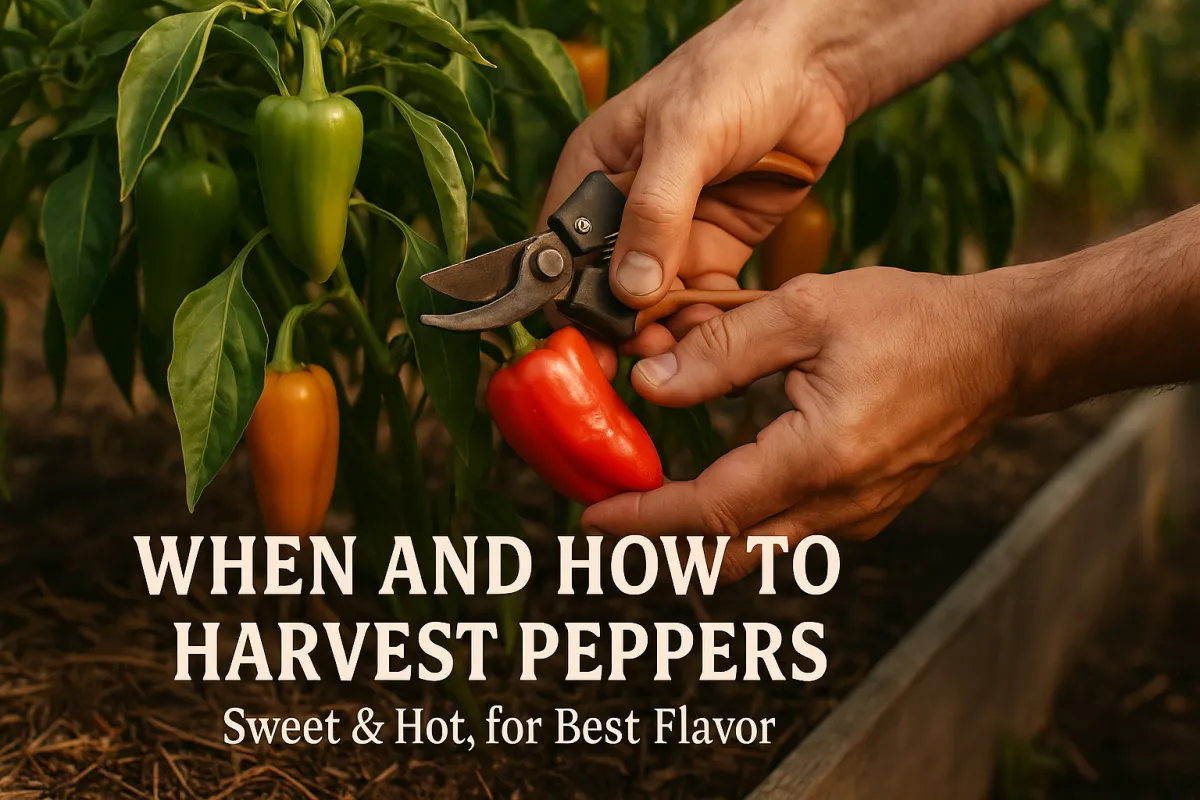
When and How to Harvest Peppers (Sweet and Hot) for Best Flavor
My First Pepper Harvest Surprise
The first year I grew peppers, I picked every single one as soon as it looked “big enough.” They were green, firm, and… disappointing. The flavor was grassy, almost bitter, and they never matched the peppers I bought at the farmers’ market. The next year, I waited too long and some went soft on the plant. That’s when I learned: the secret to great peppers isn’t just growing them—it’s knowing when to harvest them and how to do it without harming the plant.
If you want peppers that taste like they came out of a chef’s kitchen, not the bargain bin, timing and technique are everything.
Understanding Pepper Color Stages
Peppers don’t just “get big and stop.” They go through several stages, and each stage has its own flavor profile:
Green – This is the earliest harvest stage. Crisp, slightly grassy, mildly bitter. Great for stir-fries, fajitas, and stuffing.
Yellow / Orange – The middle stage, where sugars develop. Sweeter and more colorful — perfect for roasting or slicing fresh into salads.
Red (Fully Ripe) – Peak flavor and nutrition. Sweetest in bell types, hottest in hot peppers. Best for salsa, grilling, and eating fresh.
Special Varieties – Some ripen to chocolate, purple, or striped patterns. Know your variety so you don’t mistake an unripe pepper for a ripe one.
How Maturity Impacts Flavor and Heat
The longer a pepper ripens, the more sugars and capsaicin it develops.
Sweet peppers go from slightly grassy → mildly sweet → fully sweet with a hint of fruitiness.
Hot peppers ramp up in heat as they ripen. A green jalapeño is spicy but a red jalapeño is noticeably hotter.
Quick Pairing Suggestions:
Green: Slice for fajitas, dice for chili, stuff for classic “stuffed peppers.”
Yellow/Orange: Roast and toss on pizza or blend into creamy soups.
Red: Grill whole, chop for salsa, or pickle for winter sandwiches.
Hot (fully ripe): Dry for homemade chili flakes, ferment for hot sauce, or freeze for winter recipes.
How to Harvest: Snipping vs. Pulling
Here’s where most gardeners go wrong — they grab and pull. That can tear a branch or even snap the plant.
The right way:
Hold the pepper gently with one hand.
Use clean pruners or garden scissors.
Snip the stem about ½ inch above the pepper.
Leave a small bit of stem — it keeps the pepper fresher.
This method avoids plant stress and keeps production going strong.
Harvest Frequency and Plant Productivity
Pepper plants will keep producing as long as you keep them picked. If you let too many sit on the plant and ripen fully, the plant “thinks” its job is done and slows down flower production.
Best practice:
Check plants every 2–3 days during peak season.
Harvest regularly, especially if you want a mix of green and ripened peppers.
If you want maximum production, pick some peppers at the green stage and let others mature — the plant will balance its load.
Post-Harvest Storage Tips
Short term: Leave at room temperature if you’ll use them within 2–3 days.
Longer storage: Place in a breathable produce bag in the fridge. Keeps 5–7 days.
Preservation: Freeze whole or sliced, dehydrate for pepper flakes, or pickle.
Pro move: Don’t wash until just before use. Moisture encourages mold.
Region-Specific Notes
If you’re in USDA Zone 6–8, you have the luxury of several flushes of peppers. In shorter-season zones, you might need to harvest peppers green before the first frost and let them ripen indoors on the counter.
End-of-season tip: If frost is coming, pull the whole plant, shake off the dirt, and hang it upside down in a shed or garage. The peppers will continue to ripen for a couple more weeks.
Grandma’s Tip
“If the pepper snaps clean when you bend it, it’s ready. Don’t fight it — the plant will tell you.”
Pro Tips & Avoid This Mistake
Pro Tip: Leave a short piece of stem attached when you harvest — it keeps peppers firmer and prevents rot.
Avoid: Yanking peppers off the plant. It damages branches and can shorten your harvest season.
Soft Faith Touch
The garden reminds me of Ecclesiastes 3:1 — “To everything there is a season, a time for every purpose under heaven.” Picking peppers at the right season isn’t just about food — it’s about honoring the rhythm God built into creation.
Closing & Next Step
This week, try harvesting peppers at different stages — green, yellow, red — and taste the difference. You’ll quickly find which stage your family loves best.
📥 Get the Free Pepper Harvest & Storage Cheat Sheet — a printable guide to color stages, harvest timing, and storage tips. Keep it handy in the garden or kitchen.

Facebook
Instagram
X
Youtube