
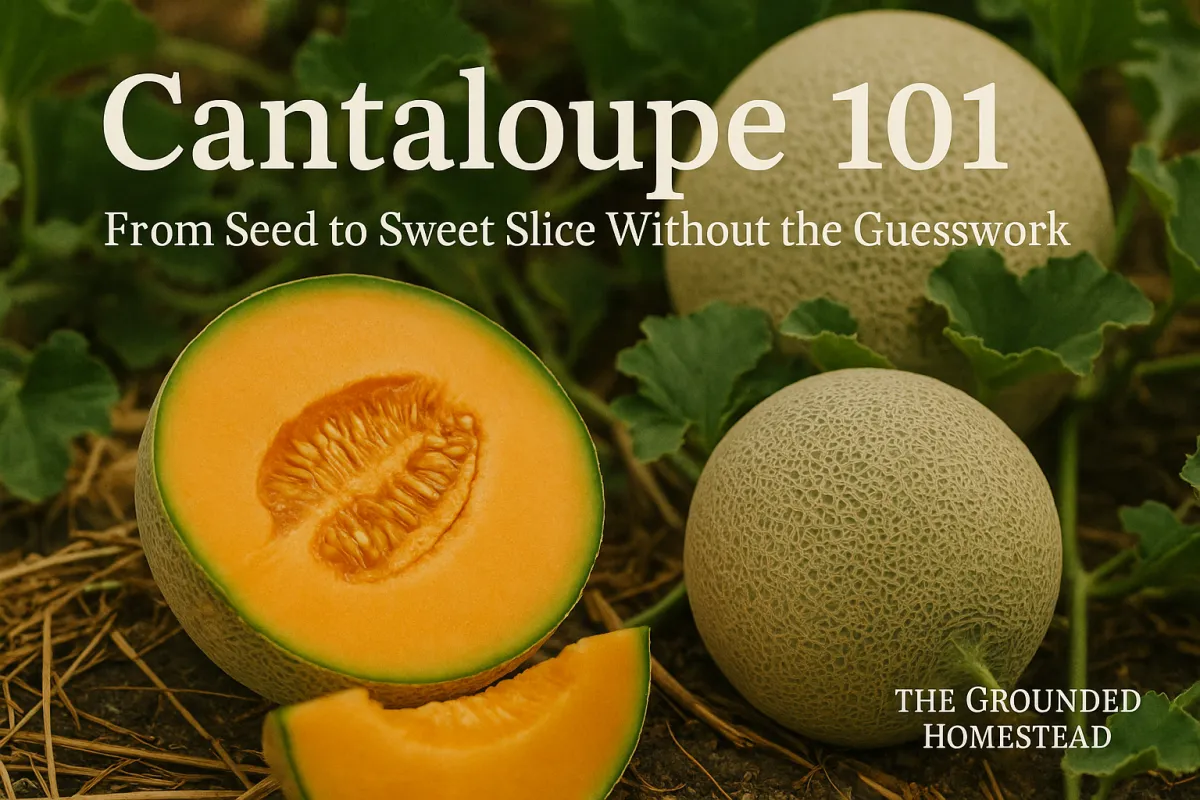
Cantaloupe 101: From Seed to Sweet Slice
Cantaloupe 101: From Seed to Sweet Slice
From Childhood Melon Patches to Today’s Rows
I still remember biting into my first homegrown cantaloupe as a kid. The flavor was worlds apart from the pale, watery slices at the grocery store. Ours was sweet, fragrant, and dripping with juice—the kind of melon that makes you pause between bites. But here’s the truth: growing cantaloupe isn’t as simple as dropping a few seeds in the ground. Done wrong, you’ll end up with bland, cracked, or never-ripened melons. Done right, though, you’ll have fruit so good it barely makes it to the table.
That’s why this guide walks you from seed to harvest, no guesswork needed.
Choosing the Right Variety for Your Zone
The first step is picking a melon that fits your climate. Classic cantaloupes like Hale’s Best Jumbo shine in warm, long summers. But if you’re gardening in a shorter-season zone, hybrids like Minnesota Midget or Ambrosia deliver reliable sweetness in fewer frost-free days.
Northern growers (Zones 4–5): Choose short-season hybrids, 70–80 days to maturity.
Southern growers (Zones 7–8+): Long-season classics thrive, but hybrids work too if you want multiple successions.
Grandma’s Tip
“Pick a melon that fits your season, not your wish list. A fruit that never ripens isn’t worth the space.”
Soil and Sun: The Foundation for Sweetness
Cantaloupes are heat-lovers. Seeds won’t sprout until soil temps are at least 65°F, and they thrive when the ground warms above 70°F. That means patience in spring pays off.
Sunlight: They need 8+ hours of direct sun daily—no exceptions.
Soil prep: Work in compost or well-rotted manure to loosen the soil and feed the vines. Sandy-loam soils give you an edge, but even heavier soil can work if it’s well-drained.
Think of the soil as the pantry for your melons. A stocked, well-prepared pantry leads to rich flavor later.
Planting Depth, Spacing, and Training the Vines
Here’s how I plant for success:
Direct sow or transplant: If your season is short, start indoors 3–4 weeks before your last frost. Otherwise, direct sow after the soil warms.
Planting depth: Sow seeds ½ to 1 inch deep. For transplants, bury them to the first set of leaves.
Spacing:
In hills: 3 seeds per hill, thinned to 1–2 strong plants, hills 3 feet apart.
In rows: 18–24 inches between plants, 5–6 feet between rows.
Training vines: If space is tight, trellis them. Use slings (old T-shirts work fine) to support heavy fruit.
Spacing matters more than most realize—airflow prevents mildew and rot.
Watering and Mulching Routines
Consistent watering is the secret to sweet melons.
Early growth: Water deeply 1–2 times per week.
Flowering and fruiting: Keep moisture steady. Sudden drought or flooding stresses the vines.
Near harvest: Ease off. Too much water late dilutes sugars and causes splitting.
Mulch with straw, dried leaves, or compost. This locks in moisture, keeps weeds down, and prevents fruit from rotting on bare soil.
Pro Tips: Avoid These Mistakes
Overwatering right before harvest → bland, split melons.
Planting too close → poor airflow, disease pressure.
Skipping mulch → weeds steal water and fruit sits on wet dirt.
Harvesting at the Peak of Sweetness
Store-bought melons are picked early for shipping, which is why they’re often flavorless. Your homegrown melons ripen on the vine—that’s the difference.
Look for these cues:
Netting: Skin develops a raised, textured net pattern.
Color: Green rind turns creamy beige.
Stem slip: Fruit pulls away from the vine with a gentle tug.
Smell test: A sweet aroma at the blossom end means it’s ready.
Pick in the morning when the vines are cool and sugars are most stable.
Basic Storage Tips
Whole melons: Keep at room temp for a few days, or refrigerate up to a week.
Cut melon: Store in an airtight container in the fridge for 3–4 days.
Longer storage: Freeze chunks, dry slices into fruit leather, or dehydrate for trail snacks.
Troubleshooting: Common Cantaloupe Problems
Even with the best care, melons can throw curveballs. Here are the most common cantaloupe problems I’ve faced — and how to handle them before they ruin your harvest.
1. Vines but No Fruit
Cause: Lack of pollination, often from poor bee activity or excess nitrogen.
Fix:
Hand-pollinate with a small brush if pollinators are scarce.
Balance fertilization — too much nitrogen pushes leaves, not fruit.
2. Melons That Never Ripen
Cause: Wrong variety for your zone, or planting too late in the season.
Fix:
Choose a cultivar that matches your frost-free window (short-season hybrids in northern zones).
Plant earlier next year when soil temps are warm enough.
3. Fruit Splitting Before Harvest
Cause: Irregular watering — dry spells followed by heavy rain or over-watering.
Fix:
Keep moisture consistent.
Mulch to buffer swings.
Ease up on watering once melons start to ripen.
4. Powdery Mildew on Leaves
Cause: High humidity and poor airflow.
Fix:
Space plants properly (at least 18–24 inches apart).
Prune back dense vines if airflow is blocked.
Spray with an organic fungicide like neem or a simple milk-water solution.
5. Melons Rotting on the Ground
Cause: Direct fruit-to-soil contact and excess moisture.
Fix:
Use straw mulch or place fruit on boards, upturned pots, or melon cradles.
Harvest promptly once ripe.
6. Pest Damage (Cucumber Beetles, Aphids, Squash Bugs)
Cause: Common melon pests feed on vines and spread disease.
Fix:
Cover young plants with row covers, then remove at flowering for pollination.
Handpick pests early in the morning.
Encourage beneficial insects like ladybugs and lacewings.
Closing: The First Bite of Summer
Cantaloupes take up space, and they demand your best soil and sunlight. But when you sink your teeth into that first slice, you’ll know it was worth it.
Here’s your next step: choose one variety that fits your growing zone, plant it this season, and keep notes on how it performs. By next summer, you’ll have a clearer picture of what works best for your homestead.
Lead Magnet / Printable Tool
Cantaloupe Grower’s Cheat Sheet
One-page chart with:
Minimum soil temps
Spacing and planting depth
Weekly watering guide
Harvest readiness checklist

Facebook
Instagram
X
Youtube