
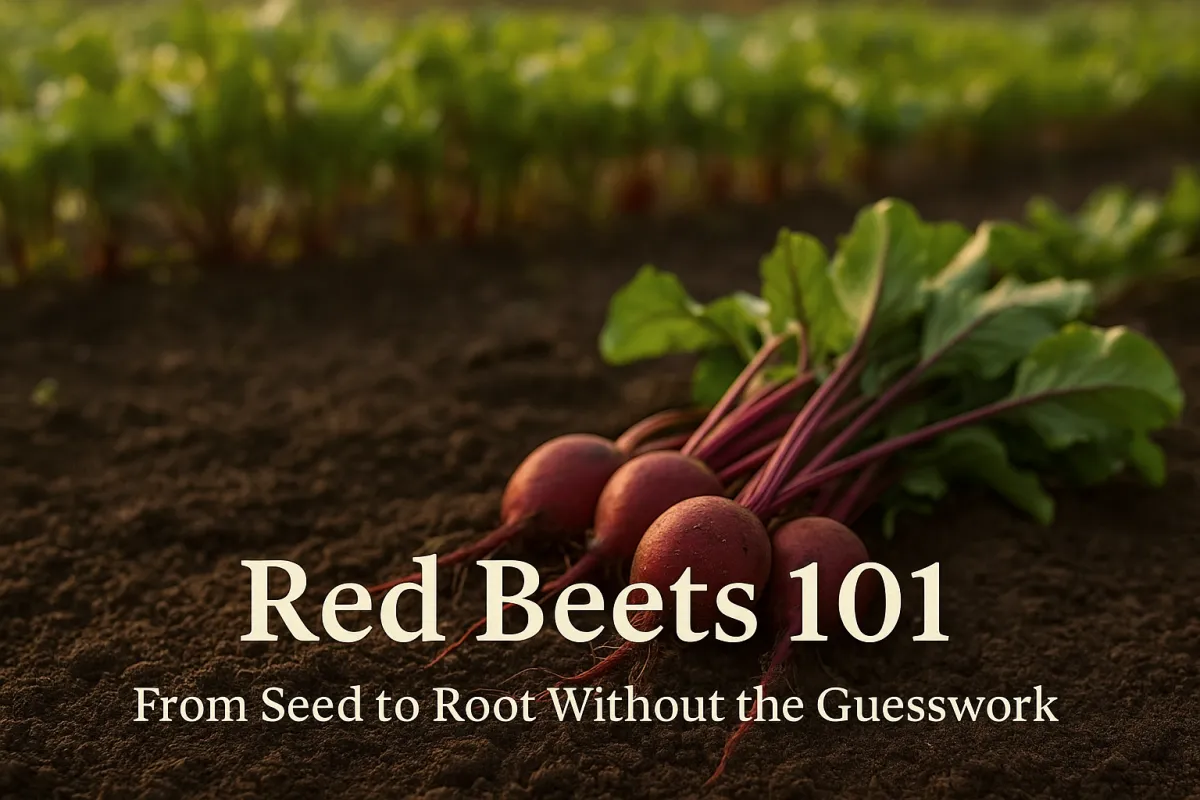
Red Beets 101: From Seed to Root Without the Guesswork
Red Beets 101: From Seed to Root Without the Guesswork
How to grow deep, sweet roots without second-guessing every step
The First Time I Got Beets Right
I didn’t grow up loving beets. Honestly, they weren’t even on my radar until a few years into homesteading. But once I tasted a roasted Detroit Dark Red fresh from the garden—sweet, earthy, no bitterness—I realized what I’d been missing.
The first time I tried to grow them, though? Disaster. Crowded rows, rocky soil, stunted roots. Grandma saw my beet patch and said, “Well, they sure had to fight for room, didn’t they?” She was right. That was the year I learned: beets are simple, but not forgiving.
This guide is here to save you that pain. Whether you’re planting your first crop or trying to improve your last, here’s how to grow red beets the right way—without the guesswork.
🖨️ Want a printable version to take into the garden? Grab the Beet Growing Quick Sheet below.
1. Choose the Right Variety for Your Garden and Kitchen
Start with the end in mind—what kind of beet do you want on your plate?
Detroit Dark Red – The classic. Round roots, deep red flesh, consistent growth. Great for roasting, pickling, or eating raw. Reliable in nearly every zone.
Cylindra – Long, uniform, almost carrot-shaped. Easier to slice for roasting and more roots per row.
Chioggia – Candy-striped flesh, sweet and less earthy. A showstopper at the table, but milder flavor.
Golden – Bright yellow flesh with a buttery taste and no staining. Great for kids or beet skeptics.
Tip: If you love beet greens, choose a variety known for strong tops like Detroit or Early Wonder.
2. Why Beets Need to Be Direct Sown (Not Started Indoors)
Beets have one big preference: they don’t like being moved. Transplanting almost always leads to stunted, forked roots.
Instead:
Sow directly once soil temperatures are above 50°F.
Loosen the soil down 8–10 inches.
For faster sprouting, soak seeds overnight before planting.
Each “beet seed” is actually a cluster, so expect more than one sprout per seed. We'll get to thinning in a minute.
3. Soil Prep: Loose, Rock-Free Beds Make All the Difference
If you do one thing right, make it this: give your beets soft, deep soil. Beets push down—any rocks, clumps, or hardpan will distort them.
Aim for well-drained, loamy soil with plenty of organic matter.
Avoid high-nitrogen amendments. You want roots, not just leafy tops.
Ideal pH: 6.5–7.5. If your soil’s too acidic, beets will struggle.
Work in compost 2–3 weeks before planting for slow-release nutrients.
Grandma’s tip: “If a marble can’t roll through your soil, a beet won’t either.”
4. Planting, Spacing, and Thinning (No Mercy for Crowded Roots)
Here’s the hard truth: thinning beets means sacrificing a few for the good of the many. Do it early and do it well.
Planting Steps
Sow ½ inch deep, 1 inch apart in rows spaced 12–18 inches.
Keep the soil evenly moist during germination (7–14 days).
When seedlings are 2 inches tall, thin to 2–3 inches apart.
You can eat the thinnings as microgreens—nothing wasted.
Crowded beets = small, misshapen roots. Space is everything.
5. When to Plant: Spring and Fall Timing by Zone
Beets thrive in cooler temps. Here’s how to time your planting:
ZoneSpring PlantingFall Planting3–42–3 weeks before last frostNot recommended5–6Late March–MayLate July–early August7+October–NovemberAugust–September
Soil temp matters — 50–85°F is ideal for germination.
For a steady harvest, sow every 2–3 weeks in spring or fall.
6. Companions, Rotation, and Soil Sanity
Don’t plant beets just anywhere. What grew there last season makes a difference.
Good companions:
Lettuce, bush beans, onions
Bad pairings:
Spinach, Swiss chard (same family, depletes similar nutrients)
Heavy feeders like corn or cabbage
Rotate crops annually and avoid areas with recent fresh manure. Overfeeding leads to big leaves but puny roots.
7. Harvesting Roots and Greens at the Right Time
Beets mature between 50–70 days, but you can pick them early if you like them small.
Baby beets: harvest at golf ball size, around 35–40 days
Full-size: when shoulders push above the soil, about 2–3 inches in diameter
Greens: harvest outer leaves as the plant grows, or take the full bunch when pulling roots
Grandma’s check: “If the greens are tall and proud, the roots are probably ready too.”
Don’t wait too long—overgrown beets get woody fast.
8. Storage, Preservation & Recipes
Beets are generous. Grow them right, and they’ll feed you for months.
Store unwashed in the fridge in a damp towel or perforated bag (lasts 2–3 months)
For root cellar storage, clip tops to 1 inch and bury in sand or sawdust
Blanch and freeze slices or dice for soups
Coming soon: Grandma’s classic beet pickling recipe
9. Common Problems and What to Do Naturally
IssueLikely CauseNatural FixPatchy germinationCold or dry soilWait for warmer temps, soak seedsForked rootsRocks or hard soilDouble-dig and remove debrisYellowing leavesMagnesium deficiency or soggy soilAdd epsom salt or improve drainageBolting (flowering)Too hot, too soonSow later or choose bolt-resistant typesChewed leavesFlea beetles or leaf minersFloating row cover, remove damaged leaves
The Root That Pays You Twice
Beets are honest. What you see above ground is usually what you get below. When you plant them with intention—good soil, proper spacing, and consistent care—they repay you twice: lush greens up top, sweet roots below.
They’re a quiet, faithful crop. Not flashy. But deeply nourishing.
“The one who tends his soil will have plenty of bread.” – Proverbs 12:11

Facebook
Instagram
X
Youtube