
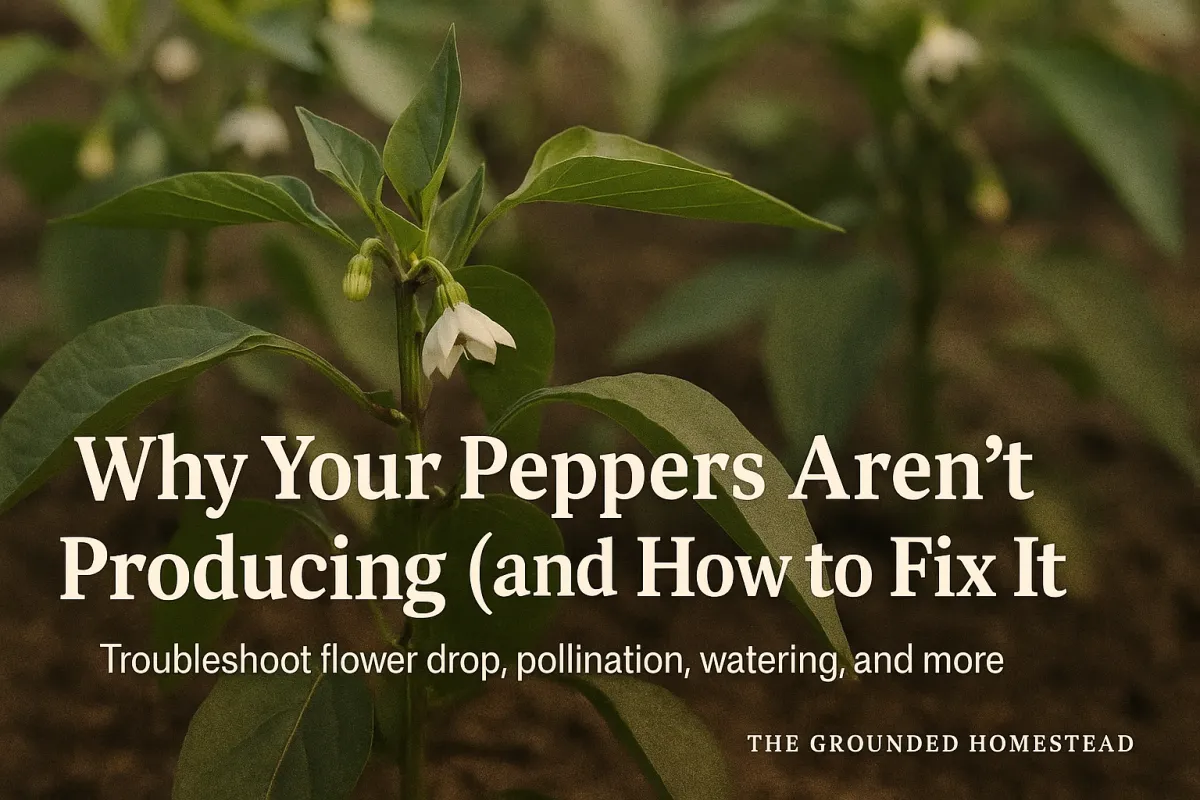
Why Your Peppers Aren’t Producing (and How to Fix It)
Why Your Peppers Aren’t Producing (and How to Fix It)
The Year My Pepper Plants Looked Great—But Stayed Empty
One summer I had the best-looking pepper plants I’d ever grown—thick, dark-green leaves, strong stems, perfect height—and not a single pepper in sight. I kept waiting, watering, and staring at those plants until it finally clicked: they weren’t broken, but I was doing a few things wrong. Once I fixed those mistakes, the fruit came on strong.
Peppers that won’t produce can drive you crazy—but most of the time, the fix is straightforward. Here’s what I’ve learned about getting them to set fruit and keep producing all season.
Understand the Basics: What Peppers Need to Set Fruit
Peppers are a bit more particular than tomatoes. They need:
Warm but steady temperatures — ideally 70–85°F days and 60–70°F nights
Good pollination — insects or a little movement to transfer pollen
Balanced nutrition — not too much nitrogen, not too little potassium
Consistent moisture — neither bone-dry nor swampy
Time — some varieties take longer than others
If you’re in USDA Zones 4–8 like me, don’t expect much before mid-summer unless you start them early indoors.
1. Temperature Trouble: High Heat vs. Cool Nights
When It’s Too Hot
If your pepper flowers drop during the heat of summer, you’re not alone. When daytime temps soar over 90°F or nighttime temps stay above 70°F, blossoms often abort.
Fix:
Use shade cloth or a lightweight row cover to cool plants during extreme heat.
Water early in the morning to reduce stress.
Mulch soil to stabilize root temperatures.
When Nights Are Too Cool
Early in the season, cool nights below 55°F can delay fruit set.
Fix:
Wait until soil is consistently warm before transplanting.
Use row covers or cloches to hold in heat at night.
Don’t panic—plants will usually catch up once nights warm.
2. Fertilizer Mistakes: All Leaves, No Fruit
If your plants are lush but bare, you may be overfeeding nitrogen. Nitrogen pushes leafy growth but can delay flowering.
Fix:
Switch to a balanced fertilizer (something close to 5-10-10 or 10-10-10).
Apply every 3–4 weeks, following package instructions.
Stop heavy nitrogen feeding once plants are well established.
3. Lack of Pollination
Peppers are self-pollinating but still need a little help to move pollen. If your garden has few bees or there’s no wind, flowers may wither without setting fruit.
Hand-Pollination Tips:
Shake the plant gently in the morning to spread pollen.
Use a paintbrush or cotton swab to dab pollen from flower to flower.
Try an electric toothbrush—hold it near the flower to mimic a bee’s vibration.
4. Water Stress and Irregularity
Erratic watering is a top reason for poor fruit set and misshapen peppers.
Fix:
Water deeply 1–2 times a week rather than frequent light sprinkles.
Use mulch to keep moisture consistent.
Aim for soil that’s evenly moist but never soggy.
5. Variety Maturity Times: Patience Matters
Some peppers simply take their time. Bell peppers often need 70–90 days to mature, while hot peppers can take even longer.
Recommended Pepper Varieties
GoalRecommended VarietiesNotesFast-Maturing Bell Peppers‘Ace’, ‘King of the North’, ‘California Wonder’Good for Zones 4–6, produce earlier in cooler summersHeat-Tolerant Varieties‘Carmen’, ‘Gypsy’, ‘Islander’Hold blossoms better during heat wavesCompact/Container-Friendly‘Lunchbox Red/Orange/Yellow’, ‘Baby Belle’, ‘Mohawk’Great for patios or small raised bedsHot Peppers with Reliable Set‘Jalapeño Early’, ‘Hungarian Wax’, ‘Cayenne Long Slim’Mature earlier than super-hot types
Choosing the right variety can make the difference between frustration and a full harvest.
Tip:
In shorter growing seasons (Zones 4–5), look for early-maturing varieties like ‘Ace’ or ‘King of the North.’
Start seeds indoors 8–10 weeks before last frost date to get a head start.
Grandma’s Tip
“Peppers are stubborn—treat them steady, not fancy.”
Pro Tips & Common Mistakes to Avoid
✅ Do fertilize moderately after fruit set.
✅ Do keep soil consistently moist.
❌ Don’t overload on nitrogen all season.
❌ Don’t panic if production slows in extreme heat—it often picks back up once temps normalize.
A Quiet Lesson in Patience
Peppers remind me that growth can’t be rushed. Sometimes you do everything right, and all you can do is wait. Proverbs 13:19 says, “A desire accomplished is sweet to the soul.” There’s something satisfying about waiting for that first pepper and knowing your care brought it to the table.
Free Tool: Pepper Troubleshooting Checklist
Download my printable Pepper Troubleshooting Checklist to quickly diagnose and fix problems in your garden.
Final Word & Next Step
Keep an eye on one variable at a time—fix watering first, then adjust feeding, then try hand-pollinating. Within a few weeks, you’ll usually see new flowers holding and peppers starting to form.
[📥 Download the Pepper Troubleshooting Checklist Here]
And if you find these tips helpful, join my weekly Garden Notes newsletter for more hands-on advice.

Facebook
Instagram
X
Youtube