
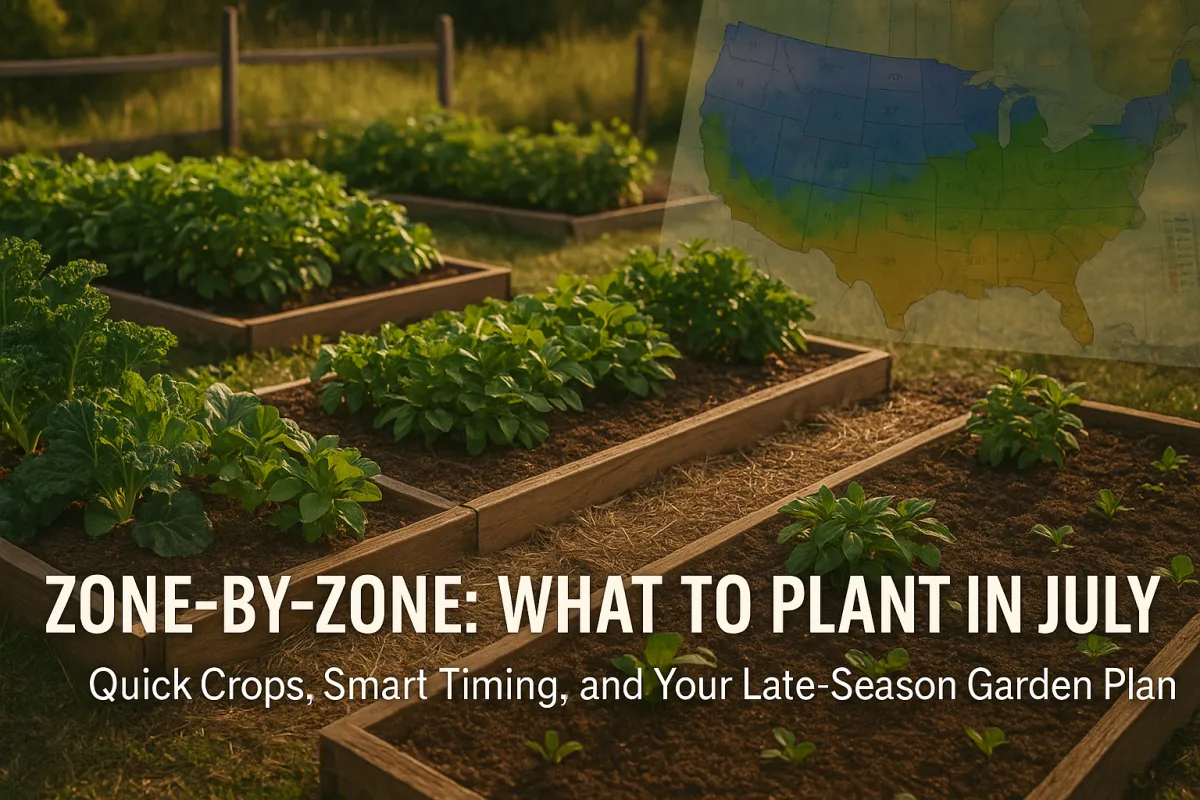
Zone-by-Zone Guide: What You Can Still Plant in July (And Why You Should)
Zone-by-Zone Guide: What You Can Still Plant in July (And Why You Should)
Missed the First Wave? You’re Not Too Late
One summer, I was convinced I had missed the boat. Life had gotten in the way—too many projects, too many excuses—and by the time July rolled around, my garden looked more like a patch of sunbaked weeds than a food source. But I pulled back the mulch, tossed in a few late packets of bush beans and kale, and by mid-September, we were harvesting like champs.
If you’re reading this thinking you missed your chance to grow something this year, I’m here to tell you: July is not the end. It’s an opportunity—if you know what you’re doing. And this post is going to give you the exact crops to plant for your USDA zone, how to prepare your garden, and a free printable chart so you can reference it all season long.
The Truth About Late-Season Planting
Let’s deal with the elephant in the room.
You might be wondering:
Isn’t it too hot to plant anything?
Will I really get a harvest before frost?
Is it even worth the effort this late in the game?
Short answer: yes.
The long answer is that many crops actually do better when planted now. Warm soil speeds up germination. Pests that plagued your spring seedlings may have tapered off. And there’s a whole category of fast-maturing vegetables built for quick payoffs.
You don’t need a full garden overhaul. You just need to plant smart.
Know Your Zone: Understanding Summer-to-Fall Transitions
Before you start tossing seeds in the dirt, get clear on your USDA Plant Hardiness Zone. That number—based on your average lowest winter temperature—guides what you can grow and how long you’ve got.
👉 Find your zone here
But here’s the real key: focus on your first frost date. That’s the day you’ll count backward from to see how many growing days you have left. For example, if your first frost is October 10, and you’re planting kale that matures in 55 days, you’ve got time to spare.
💡 Microclimates matter. If your garden is in a sunny nook against a south-facing wall, you may have two extra weeks of growing time. Raised beds warm faster. Mulch keeps soil temps steady. All of that works in your favor.
Get the Soil Right: Prepping Beds for Mid-Summer Crops
Let’s talk logistics. July soil isn’t the rich, loamy stuff of spring—it’s dry, depleted, and sunbaked. But it can be revived.
Here’s how:
Top-dress with compost or worm castings. This refreshes nutrients without disturbing roots.
Water deeply the night before planting. Dry soil repels water. Get it soaking first.
Mulch immediately after planting. Use straw, shredded leaves, or grass clippings to lock in moisture and regulate temperature.
Stick to morning watering. Evening watering invites mildew. Grandma always said, “Water in the cool, harvest in the heat.”
What to Plant in July: Quick-Maturing Crops by Zone
These aren’t random lists. These are battle-tested, quick-turn crops that give you a harvest before frost if planted now.
Zones 3–4
Lettuce
Spinach
Arugula
Turnips
Mache (corn salad)
→ Focus on cold-hardy greens and plan for row cover protection later.
Zones 5–6
Bush beans
Beets
Carrots
Kale
Swiss chard
Radishes
→ These thrive in late summer warmth and can handle a light frost.
Zones 7–8
Cucumbers (short-season types)
Okra
Southern peas
Basil
Zucchini
→ Choose heat-loving crops with a short maturity window (under 65 days).
Zones 9–10
Tomatoes (early, compact varieties)
Peppers
Eggplant
Melons
Malabar spinach
→ With a long growing season, you can still plant summer staples—and even start a fall garden soon.
🧭 Pro tip: Flip your seed packet. Look for “Days to Maturity.” You want crops that hit that sweet spot of 50–65 days or less.
Choosing the Right Varieties: Heat-Tolerance and Speed
It’s not just what you plant. It’s which kind.
When buying seeds or starts in July, look for these traits:
“Bolt-resistant” — won’t go bitter in summer heat
“Heat-tolerant” — thrives above 85°F
“Early” or “patio” varieties — bred for short seasons and small spaces
Some examples:
Contender bush beans (49 days)
Cherry Belle radishes (22 days)
Early Prolific straightneck squash (45 days)
Dwarf Siberian kale (50 days)
Genovese basil (50 days)
Grandma used to save seed packets with hand-scribbled notes: “Fast and sweet,” or “Bolted too quick.” That kind of observational gardening is the goal.
Succession Planting: Turning July into a Fresh Start
July is your second wind.
Succession planting means removing spent crops (like bolted lettuce) and replanting something else in its place. You can even squeeze in multiple short-season crops between now and frost.
Try this:
Lettuce → Bush Beans → Spinach
Radishes → Carrots
Garlic (harvested) → Kale
And mix it up:
Use direct-sown seeds for radishes, carrots, beans.
Use transplants for basil, kale, or peppers to save time.
The goal is continuity—filling every bed with something edible.
Mid-Summer Growing Hacks: Shade + Pest Control
Late-season doesn’t mean low-maintenance.
Here’s how to protect your July crops:
Use shade cloth (30–50%) over leafy greens to prevent bolting.
Create natural shade by planting next to taller crops like corn or trellised beans.
Insect netting or row covers keep flea beetles, whiteflies, and aphids at bay.
Spray with neem oil or diluted castile soap for organic pest control.
Grandma’s tip: “It’s not just what you plant—it’s how you protect it.”
Your Printable July Planting Toolkit
✅ Included in your free download:
Zone-by-zone crop recommendations
Days to maturity chart
Frost countdown timeline
Companion planting cheat sheet
Printable checklist version for mobile or binder
📌 Print it. Pin it. Stick it on your fridge. This is your July roadmap.
Final Word: Start Where You Are
Don’t waste July wishing you had planted in April.
Whether you’re in Zone 4 or Zone 10, there’s something you can grow right now that’ll feed your family and teach your hands something good. You don’t need a perfect garden—you need a willing spirit and a solid plan.
“Fast growers feed you before frost.” – Grandma
When shelves get thin in October, when prices tick up again, when you open your freezer or pantry and see what you grew—that’s when this late start will prove itself.
Let’s get planting.

Facebook
Instagram
X
Youtube