

How to Grow Carrots for a Perfect Harvest
How to Grow Carrots for a Perfect Harvest
Growing great carrots comes down to one thing: creating the perfect underground home for them. To get those straight, sweet roots everyone wants, you need loose, well-draining soil that’s completely free of rocks and clumps. If you get that right—and thin your seedlings properly—you're already most of the way to a fantastic harvest.
Your Foundation for Perfect Carrots
The secret to pulling up perfectly crisp, straight carrots isn’t some complicated fertilizer or fancy gardening trick. It starts and ends with the soil.
Since a carrot's entire life happens underground, out of sight, preparing its growing space isn't just a first step—it's the most important thing you’ll do.
So many gardeners get frustrated with forked, stunted, or woody carrots. Nine times out of ten, these problems point directly back to poor soil conditions. The moment a carrot’s delicate taproot hits an obstacle—a small rock, a hard clump of clay, even a chunk of undecomposed compost—it will split or turn. That’s what causes those classic forked shapes that look nothing like what you see at the store.
Key Takeaway: Think of your garden bed as the mold that will shape your carrots. A smooth, deep, and unobstructed mold will produce straight roots. A rough, compacted one will give you distorted results.
The Ideal Soil Composition
The absolute gold standard for growing carrots is a sandy loam. This soil type has the perfect balance: it's loose enough for roots to push down deep without a fight, but it still holds enough moisture and nutrients to fuel healthy growth.
Heavy clay soil, on the other hand, is a carrot's worst enemy. It’s dense, compacts easily, and holds way too much water, which often leads to root rot and misshapen carrots.
But don't worry if your garden doesn't naturally have that perfect texture. You can create it. The goal is to "amend" your soil, which just means improving its structure with the right additives.
Here’s a quick guide to amending your soil to create the perfect conditions for growing carrots.
Soil Amendment Guide for Growing Carrots

This process might seem like a lot of work upfront, but it's the single most effective way to ensure a successful harvest. A little time spent improving your soil now will pay off with beautifully formed, delicious carrots later.
This focus on soil quality isn’t just a backyard gardening tip; it’s a global principle. The world's largest carrot-producing regions are defined by their naturally favorable soils. China, which grows nearly 45% of the world's carrots, and the major carrot farms in the sandy soils of Norfolk in the UK, both depend on these ideal conditions for their massive yields. You can discover more about how soil impacts global carrot production and see a breakdown by country.
Achieving the Perfect pH Balance
Beyond texture, your soil's pH level is a huge factor. Carrots thrive in slightly acidic to neutral soil, with a sweet spot between pH 6.0 and 6.8.
If the soil is too alkaline (above 7.0) or too acidic (below 6.0), the plant can't properly absorb the nutrients it needs. This can lead to weak growth and pale, flavorless carrots.
You can easily check your soil’s pH with a simple home testing kit from any garden center. If you find your soil is out of that ideal range, you can make adjustments.
To Lower pH (make it more acidic): Work in some elemental sulfur or peat moss.
To Raise pH (make it more alkaline): Add garden lime or wood ash to your soil.
Just be sure to follow the application instructions on the package, because adding too much can shock your soil’s chemistry. It’s always best to amend for pH a few weeks before you plan to plant, giving the additives time to settle in and do their work.
Choosing and Sowing Your Carrot Seeds
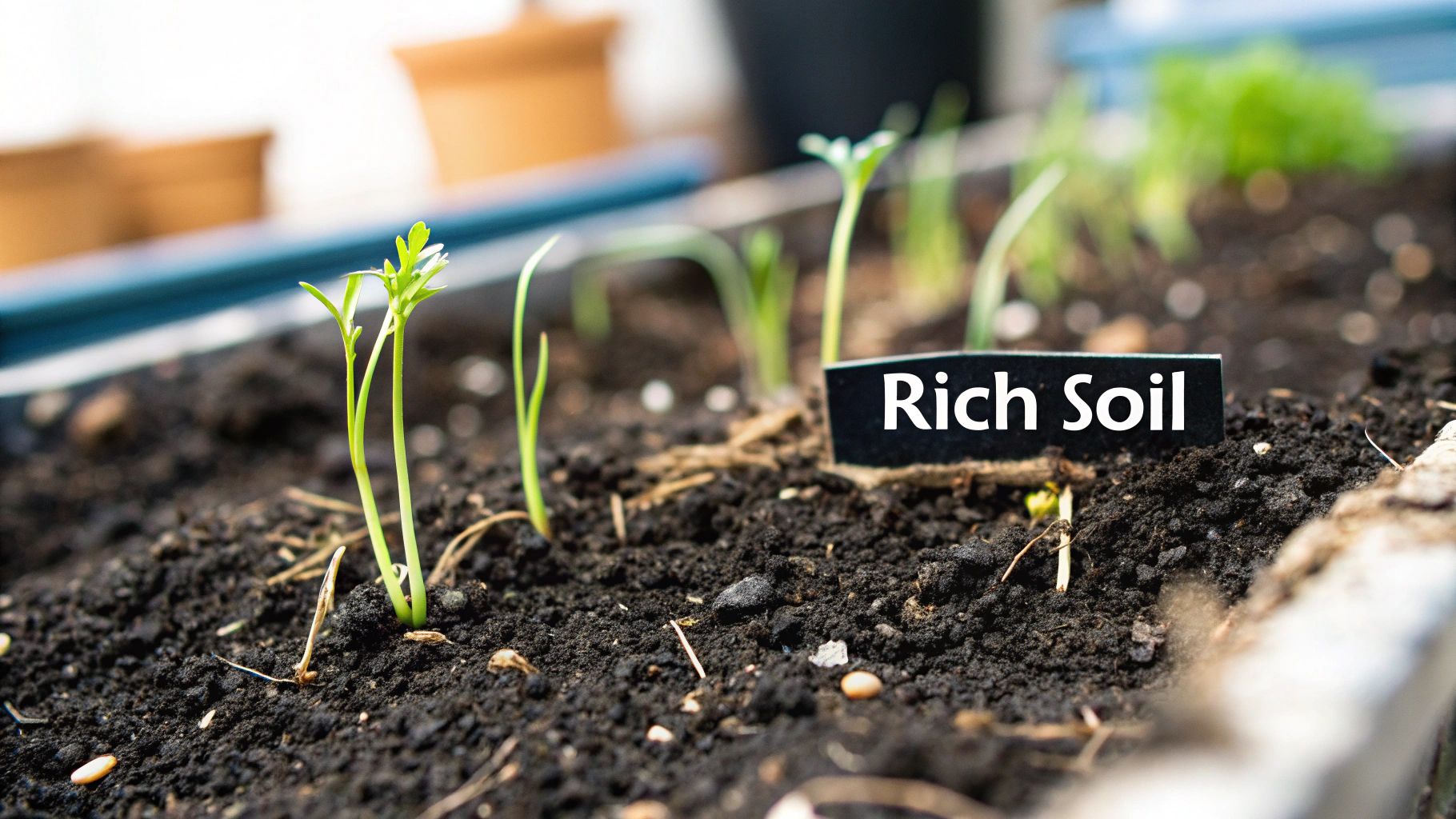
With your soil perfectly prepped, it's time for the fun part: picking and planting your seeds. Not all carrots are created equal, and choosing the right variety for your garden’s specific conditions is the first real step toward a rewarding harvest.
The world of carrot seeds is surprisingly diverse. Your choice will influence everything from root shape and size to flavor and even color. Getting to know the main types will help you match a variety to your soil depth and gardening goals.
Selecting the Right Carrot Variety
Think back to the soil you prepared. If you have that deep, loose, sandy loam, you can get away with growing long, slender types. But if your soil is heavier or you're using a raised bed, shorter, stouter varieties are a much safer bet.
Here are the main categories you’ll run into:
Imperator: These are the long, tapered carrots you typically see in grocery stores. They need deep, rock-free soil to reach their full potential, often growing 10 inches or more.
Danvers: A classic heirloom, these are shorter and more conical than Imperator types. They’re much more forgiving of heavier soil, making them a reliable choice for many home gardens.
Chantenay: Stout, wide-shouldered, and conical. Chantenay carrots are fantastic for clay soil or containers because they don’t need the same depth as longer varieties.
Nantes: Known for their exceptionally sweet flavor and crisp texture, Nantes carrots are almost perfectly cylindrical with a blunt tip. They're nearly coreless, making them a personal favorite for snacking.
Beyond shape, you can find seeds for carrots in a rainbow of colors, from deep purple and sunny yellow to creamy white. While these are fun to grow, especially with kids, sometimes the classic orange varieties like 'Tendersweet' or 'Mokum' offer the best all-around flavor and texture.
When you're just starting, it can be tempting to grab any seed packet. Trust me on this: a little research into which varieties thrive in your soil type can dramatically increase your success rate and prevent the frustration of forked or stunted roots.
The global carrot seed market is a massive industry, valued at around $500 million and growing. This demand fuels innovation from seed producers who are constantly developing new varieties with improved disease resistance and yields. You can find more details in this insightful report on carrot seed production.
How to Sow Your Carrot Seeds
Carrot seeds are notoriously tiny and can be tricky to space correctly. Planting them too close together is a classic mistake that leads to a tangled mess of underdeveloped roots. The goal is to sow them thinly and evenly right from the start.
One of my favorite tricks is to mix the seeds with a small amount of sand or even dry coffee grounds. This adds bulk, making it much easier to sprinkle the seeds along the row without dumping the whole packet in one spot. Another great option is seed tape, where seeds are pre-spaced in a biodegradable paper strip.
For a precise planting, follow these guidelines:
Create a shallow furrow in your prepared soil, about ¼ to ½ inch deep.
Gently sprinkle your seed-sand mixture along the furrow. Try to aim for a seed every inch or so.
Lightly cover the seeds with fine soil or compost. Don't bury them too deep—they need some light to germinate.
Pat the soil down gently to ensure good seed-to-soil contact.
After planting, the most critical task is to keep the seedbed consistently moist. If the soil surface dries out, the delicate sprouting seeds can perish. A light misting daily is often necessary, especially in warmer weather. Germination can take anywhere from 7 to 21 days, so patience is absolutely key here.
For a deeper dive into planting techniques, check out our guide on how to grow carrots from seed.
Caring for Your Growing Carrot Patch
So, your carrot seeds are up. Congratulations! Now the real work begins. This middle stage is all about consistent, thoughtful care—think of it less as a list of chores and more as guiding your plants toward a great harvest.
The three pillars of good carrot care are watering, weeding, and the all-important task of thinning. Get these right, and you'll sidestep common problems like split roots, weed competition, and a disappointing harvest of tangled, tiny carrots.
Mastering Moisture to Prevent Split Carrots
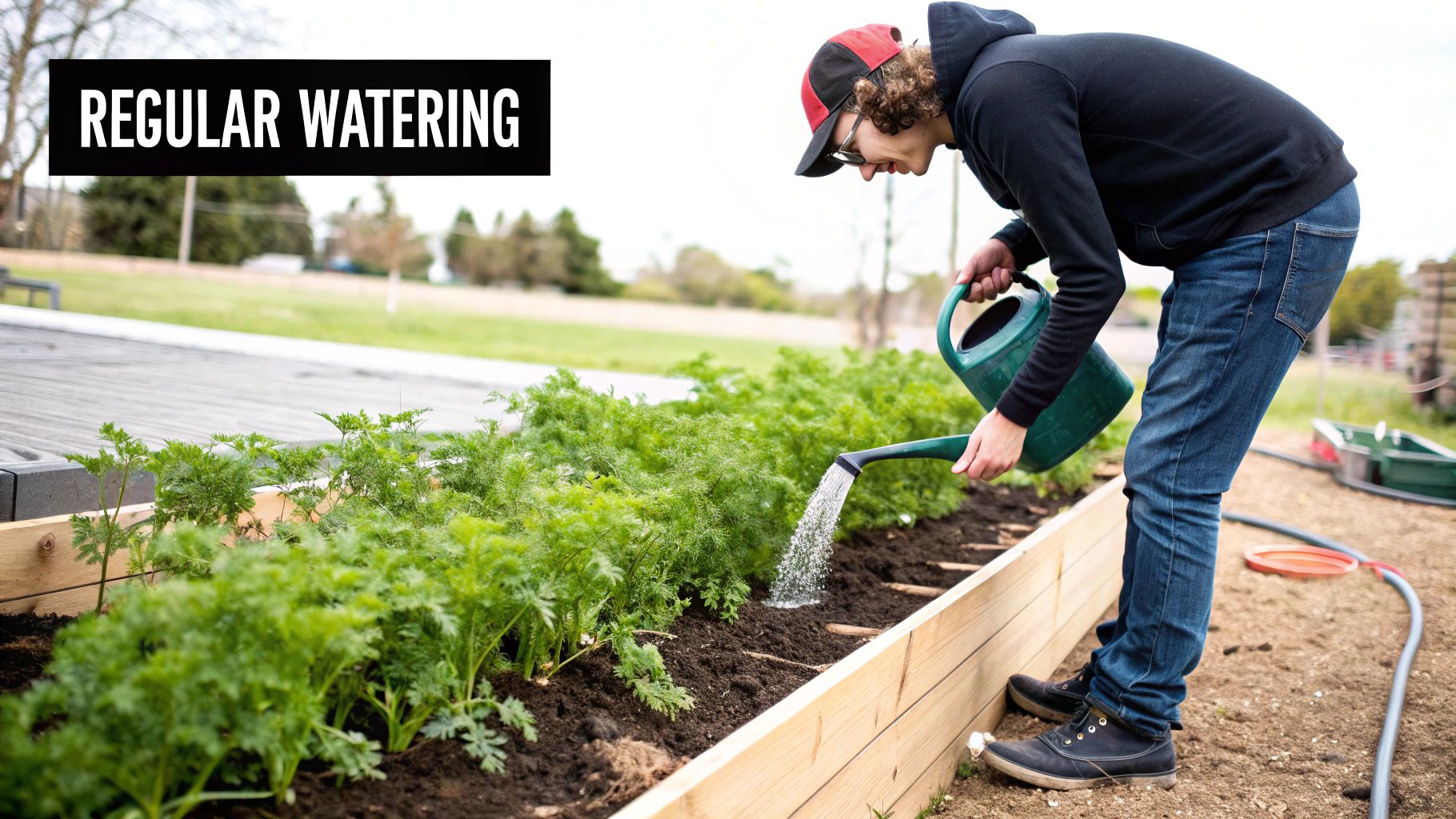
Consistent watering is non-negotiable for growing great carrots. Their long taproots need moisture deep in the soil, but they absolutely hate sitting in soggy, waterlogged conditions.
Inconsistent watering is the number one reason carrots crack or split. When a dry spell is followed by a sudden, heavy drenching, the roots try to grow too fast and literally burst their seams.
To avoid this, aim to give your patch about one inch of water per week, whether that comes from rain or your hose. The best way I've found to check is the simple finger test. Just stick your finger an inch or so into the soil near your carrot row. If it feels dry, it’s time for a good, deep soak. Watering slowly is key; it allows the moisture to penetrate deep down where the roots are developing, rather than just wetting the surface.
This infographic is a great visual reminder of how the foundational steps you took during planting set the stage for success now.
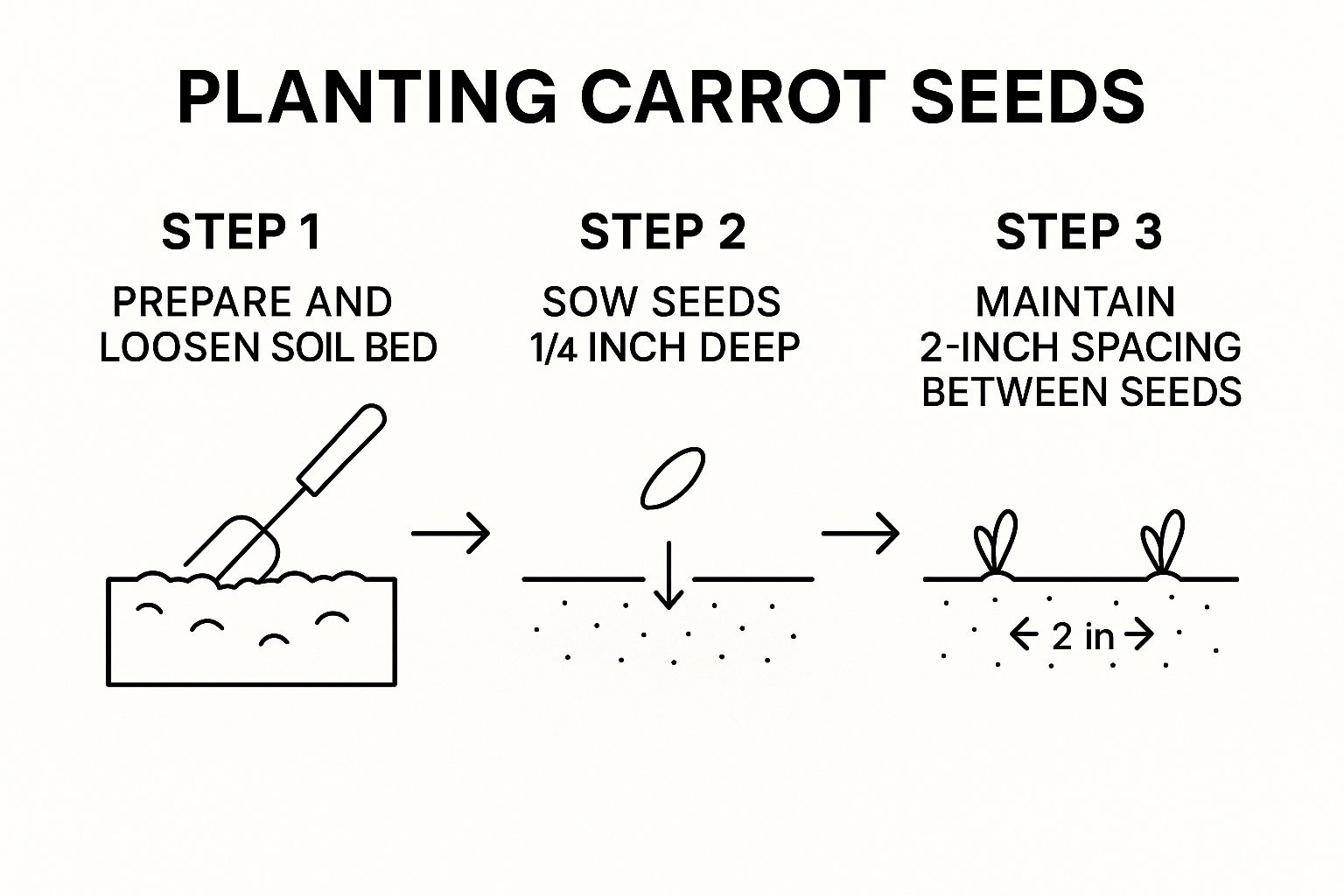
As it highlights, proper soil prep and initial spacing create an environment where your watering and thinning efforts can actually pay off.
Winning the Battle Against Weeds
Carrots are not aggressive plants. Their delicate, feathery tops don't create much shade, which leaves the soil wide open for opportunistic weeds to move in and take over.
If you let them, weeds will quickly outcompete your carrots for water, sunlight, and nutrients, seriously hurting your final harvest. Because carrot seedlings are so fragile, you have to be gentle—yanking out a big weed can easily dislodge the delicate carrot roots growing right next to it.
Weed early and often. The best strategy is to pull weeds when they are tiny and their root systems are still weak.
Use the right tools. A stirrup or scuffle hoe is perfect for slicing off tiny weeds at the surface between rows without digging too deep.
Mulch carefully. Once the carrot tops are a few inches tall, you can add a light layer of mulch like straw or grass clippings between the rows. This is a game-changer for suppressing new weed growth.
A clean carrot patch is a productive one. I make it a habit to spend just five or ten minutes every other day weeding. This small, consistent effort prevents the task from becoming an overwhelming jungle cleanup project later in the season.
The Art of Thinning for Bigger Carrots
This is probably the most important—and for many gardeners, the most difficult—job of all. Thinning feels wrong; you're pulling out perfectly good seedlings you worked so hard to grow.
But trust me, failing to do this is a guaranteed recipe for disappointment. Crowded carrots will never size up. They’ll just twist around each other, resulting in a harvest of spindly, intertwined roots instead of the beautiful, straight carrots you were hoping for. Carrots need personal space to develop.
When and How to Thin Your Carrots
First Thinning: When the seedlings are about 1-2 inches tall, it's time for the first pass. The best way to do this without disturbing the neighbors is to snip the tops of the seedlings you want to remove right at the soil line with a small pair of scissors. Aim to leave about one inch of space between each remaining plant.
Second Thinning: A couple of weeks later, when the tops are more established, go through for a second thinning. This time, you can carefully pull the smaller seedlings, leaving the strongest ones with 2-3 inches of space between them. And don't toss those tiny carrots you just pulled—they are completely edible and are delicious in salads!
It’s a small sacrifice that pays off big time in the end. By giving each carrot room to breathe, you're setting yourself up for a harvest of thick, straight, and delicious roots.
Managing Common Carrot Pests and Diseases
Even the most well-tended garden will eventually get some unwanted visitors. When you're growing carrots, a handful of specific pests and diseases can quickly turn a beautiful crop into a major disappointment. The real trick is to stay ahead of them, acting preventatively with organic solutions to protect your harvest without reaching for harsh chemicals.
Think of this as your field guide for the carrot patch. Learning to spot the early signs of trouble means you can step in quickly, keeping your plants healthy and on track for a great harvest.
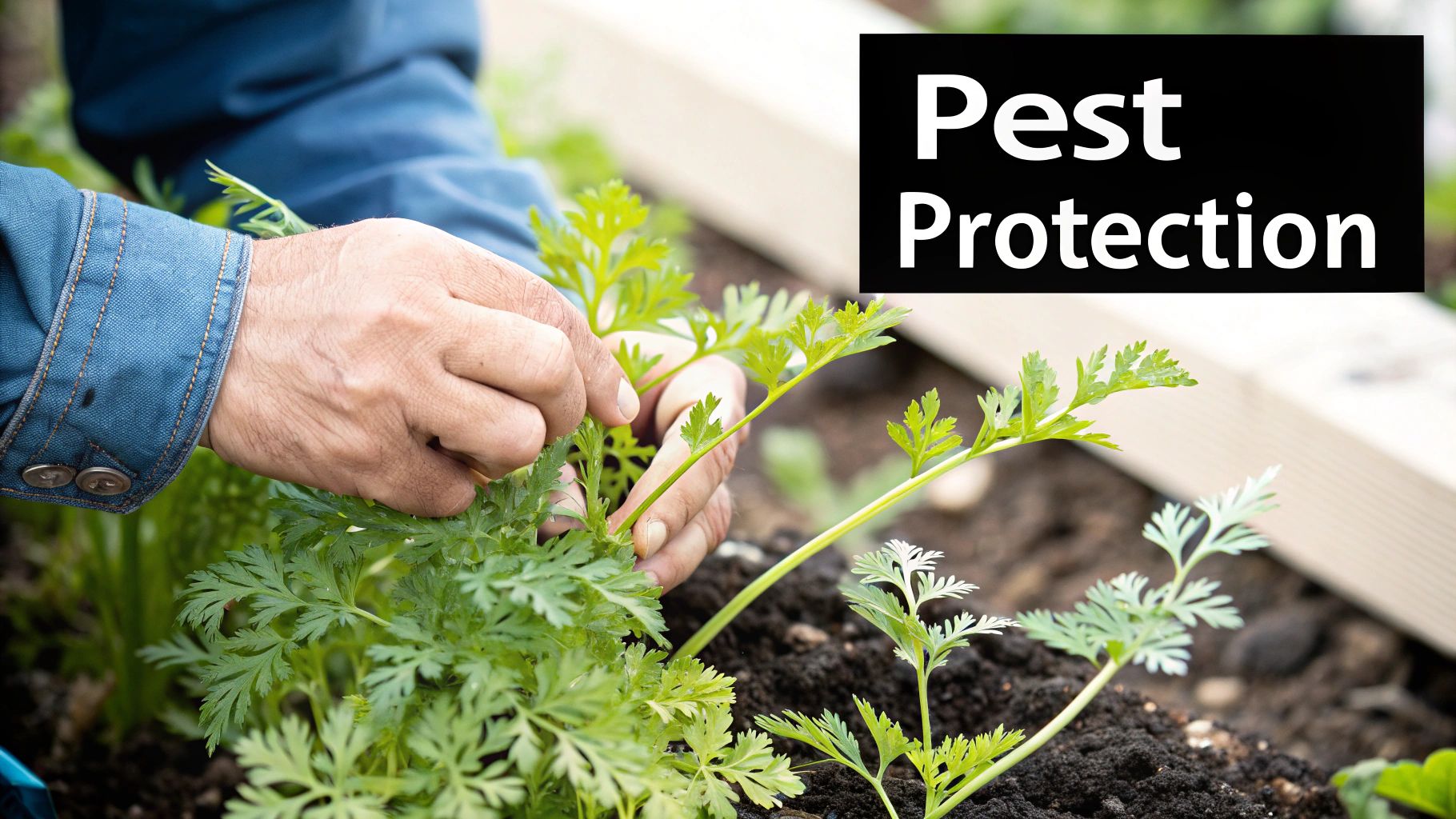
Carrot Rust Fly: The Number One Enemy
If there's one pest that carrot growers universally dislike, it's the carrot rust fly (Psila rosae). The adult fly itself isn't the problem; it’s the larvae that do all the damage. The flies lay their eggs in the soil right next to your carrot crowns. When the maggots hatch, they burrow straight into the roots, carving out rusty-looking tunnels and ruining the crop.
You’ll know you have a problem if you pull up a carrot and find it riddled with dark, zig-zagging channels just under the skin. The tops of heavily infested plants might also turn yellow and look wilted.
Thankfully, prevention is pretty straightforward.
Use floating row covers. This is hands-down the most effective physical barrier. Drape a lightweight fabric over your carrot patch from the day you plant, and make sure to secure the edges so the flies can’t sneak underneath to lay their eggs.
Practice crop rotation. Never plant carrots in the same spot year after year. Moving them around the garden helps break the rust fly’s life cycle in your soil.
Time your thinning. The smell of crushed carrot leaves is like a dinner bell for these flies. If you can, wait to thin your seedlings until a calm, overcast evening when the flies are less active.
The best defense against the carrot rust fly is a good offense. Physical barriers and smart planting habits are far more effective than trying to fix an infestation after it's already started.
Other Common Pests to Watch For
While the rust fly gets most of the bad press, other critters can cause headaches, too. Wireworms, the slender, hard-bodied larvae of click beetles, chew clean holes straight through the roots, making them unappealing.
Nematodes, which are microscopic roundworms, cause small, knotty galls to form on the roots, which stunts the plant’s growth. The best way to combat these soil-dwellers is to focus on building healthy soil rich in organic matter. This encourages beneficial microorganisms that prey on these pests. For a closer look at these and other threats, check out this guide on the top 5 carrot pests.
Keeping Fungal Diseases at Bay
Carrot diseases are usually fungal in nature, and they absolutely love damp, humid conditions. Two of the most common culprits are Cercospora leaf blight and Alternaria leaf blight.
Cercospora shows up as small, dark spots with yellow halos on the leaves. Alternaria causes irregular brown-to-black spots that can eventually cause the entire leaf to turn yellow and die back. Both diseases cripple the plant's ability to photosynthesize, leading to smaller, weaker roots.
Prevention is all about good air circulation and smart watering.
Water the soil, not the leaves. Use a soaker hose or drip irrigation to get water directly to the root zone where it’s needed.
Give them space. Don't overcrowd your carrots. That 2-3 inches of space you created when thinning is critical for good airflow between the plants.
Keep the patch weed-free. Weeds trap moisture and humidity around your plants, creating the perfect breeding ground for fungal spores.
I've put together a quick-reference table to help you spot and solve some of the most common issues you might run into. It’s a handy guide for identifying and organically managing threats to your carrot crop.
Common Carrot Pest and Disease Solutions

By combining these preventative strategies, you’re not just fighting problems—you’re building a resilient garden ecosystem. A healthy, well-managed patch is far less inviting to pests and diseases, ensuring the carrots you pull from the ground are as healthy and delicious as possible.
Harvesting and Storing Your Carrots
After months of nurturing your soil and patiently tending those feathery green tops, the moment of truth is finally here. There's almost nothing more satisfying in a garden than pulling your first homegrown carrot from the earth. Getting the timing right is the key to unlocking that peak sweetness and crisp, crunchy texture you've been working toward.
But the work doesn't stop once the carrots are out of the ground. Knowing how to handle and store your harvest properly is what will keep them tasting garden-fresh for weeks, or even months, to come.
Knowing When to Harvest
Your seed packet is your best friend here. The "days to maturity" listed is your starting line, but it’s not a finish line set in stone. Weather, soil, and a dozen other little variables can shift the timeline, so you'll need to trust your eyes, too.
Gently brush away some soil from the base of the greens. You're looking for the carrot's "shoulders" to be about ½ to ¾ of an inch across. For most varieties, this is the sweet spot where you get a perfect balance of flavor and size.
That said, you can absolutely pull carrots as soon as they're big enough to eat. Young, tender carrots are often incredibly sweet. Don't be afraid to pull a few early as a tasty "test batch."
A little tip I've picked up over the years: let your main crop experience a light frost before you pull it. The cold signals the plant to convert starches to sugars, which acts as a natural antifreeze and makes the carrots noticeably sweeter.
The Right Way to Pull Your Carrots
Just grabbing the tops and yanking is a recipe for frustration. More often than not, you’ll end up with a handful of greens and a snapped-off root still in the ground, especially if your soil has compacted a bit. The secret is to loosen things up first.
Here’s a simple method that works every time:
Water the Patch: If the soil is dry and hard, give your carrot bed a good, deep watering the day before you plan to harvest. Moist soil is far more forgiving.
Loosen the Soil: Take a garden fork or trowel and stick it in the ground a few inches away from the carrot row. Gently press down and rock it back and forth to loosen the surrounding earth. This breaks the soil's grip on the root.
Pull Gently: Now, grasp the greens firmly right at the base where they meet the carrot shoulder. Pull straight up with a slight twisting motion. It should slide right out.
This gentle approach is a good habit for all your root vegetables. If you're growing beets, these same principles apply, as we cover over in our guide on how to harvest beets.
Post-Harvest Prep for Lasting Freshness
What you do in the first few minutes after pulling your carrots is critical for long-term storage. Those beautiful, leafy green tops are actually your enemy now. They will continue to pull moisture and nutrients from the root, leaving you with limp, rubbery carrots in a day or two.
Trim the greens immediately. Use a sharp knife or a pair of garden shears and cut the tops off, leaving about a half-inch of stem. Don't just toss the greens, though! They're edible and make a fantastic pesto or a flavorful addition to soup stocks.
Next, resist the urge to wash your carrots until you're ready to eat them. That thin coating of soil is a natural preservative. Just brush off any big clumps of dirt and let them air dry for an hour or so before you pack them away.
Smart Storage for a Long-Lasting Harvest
You've got a few options for storing your bounty, depending on how long you want it to last.
Short-Term (The Fridge): For keeping carrots fresh for a few weeks, pop the trimmed, unwashed roots into a perforated plastic bag. Stash them in your refrigerator's crisper drawer. The little holes in the bag let excess moisture out, which is key to preventing rot.
Medium-Term (Cold Storage): If you have a root cellar, cold pantry, or a cool garage that stays between 32-40°F, you can keep carrots for several months. Pack them in a box or bin filled with a damp medium like sand, sawdust, or peat moss. Just make sure the carrots aren't touching each other—this improves airflow and stops any potential rot from spreading.
Long-Term (The Freezer): Freezing is the way to go for year-round carrot access. Wash, peel, and then chop or slice them. Blanch them in boiling water for two minutes, then immediately plunge them into an ice bath to stop the cooking. Drain them really well, pack them into freezer bags, and you'll have perfect carrots ready for soups, stews, and roasts all winter long.
Common Questions About Growing Carrots
Even with the best soil prep, gardening has a way of keeping us humble. Carrots, in particular, can leave you scratching your head. This is your go-to guide for figuring out what to do when things don’t go quite as planned.
We’ll skip the fluff and get straight to the practical answers for the most common carrot-growing puzzles.
Why Are My Carrots Forked or Stunted?
This is, without a doubt, the number one frustration for carrot growers. You pull what you hope is a long, straight root and instead get a multi-legged creature straight out of a sci-fi movie. The culprit is almost always your soil.
When a carrot's delicate taproot grows downward and hits something hard, it has to go around it. That detour is what causes forking and splitting. Common obstacles include:
Small rocks and pebbles: Even a stone the size of a marble is enough to make a root split.
Hard clumps of clay: Heavy, compacted soil is like a brick wall to a tiny root tip.
Undecomposed organic matter: Chunks of wood chips or unrotted compost can also block the way.
Stunted, stubby carrots are usually caused by the same issue—soil that's just too dense for the root to push through. Take the extra time to prepare your beds before planting. Your goal is loose, fluffy soil, free of rocks, down to at least 10-12 inches.
Can I Grow Carrots in Containers?
Absolutely. In fact, if your garden is full of heavy clay or rocks, growing carrots in containers is a fantastic workaround. It gives you total control over the growing medium, which just about guarantees you won't get forked roots.
The trick is to pick the right pot and the right carrot variety. Your container has to be deep enough for the carrot's full-grown length, plus a couple of extra inches for good measure. A 5-gallon bucket or any pot that’s at least 12 inches deep is a great place to start.
For seeds, look for shorter, stockier types that are happy in a contained space.
Chantenay types: These are known for their wide shoulders and conical shape, making them a perfect fit for pots.
Paris Market: A fun, round heirloom that looks more like a radish and works great in shallower containers.
Danvers Half Long: This classic variety is much more forgiving of limited depth than its long, slender cousins.
Fill your container with a high-quality, loose potting mix, sow your seeds, and care for them just like you would in a garden bed. Just remember that pots dry out much faster than the ground, so keep a close eye on the moisture level.
Pro Tip: Growing carrots in a pot creates a perfect, obstacle-free world for them. It’s one of the most reliable ways to get beautifully shaped carrots, making it a great method for beginners.
What Causes Green Shoulders on My Carrots?
Ever pulled a carrot and noticed the very top—the part that was poking out of the ground—is green and tastes a little bitter? That’s a super common issue caused by simple sun exposure.
Like a potato, when a carrot's root crown is exposed to sunlight, it starts producing chlorophyll. The process is natural and totally harmless, but it definitely impacts the flavor of that part of the root.
The fix is easy: just hill your carrots. As they grow and their shoulders start to push up out of the soil, gently mound more soil or a light mulch (like straw or grass clippings) around their bases. This keeps them covered and protected from the sun, ensuring every inch of your carrot stays sweet and orange. Check on them every couple of weeks, especially after a heavy rain that might have washed some soil away.
When Is the Best Time to Harvest for Sweetness?
Figuring out the perfect time to harvest is part science, part art. The "days to maturity" listed on your seed packet is a great starting point, but the very best flavor often comes with just a little bit of patience.
Carrots sweeten as they mature. If you pull them too early, they'll be crisp but won't have much flavor. If you wait too long, they can turn woody and fibrous. The sweet spot is usually right around that maturity date, once the shoulders are about ½ to ¾ of an inch across.
But here's a little trick for an extra boost of sweetness: if you can, wait to harvest until after the first light frost. The cold temperatures trigger the plant to convert its starches into sugars, which works like a natural antifreeze for the root. This little bit of plant biology results in a noticeably sweeter, richer-tasting carrot.
At The Grounded Homestead, we believe that growing your own food is one of the most rewarding steps toward a healthier lifestyle. We're here to provide the knowledge and support you need for every part of your gardening journey. Visit us to explore more guides and join our community!

Facebook
Instagram
X
Youtube