
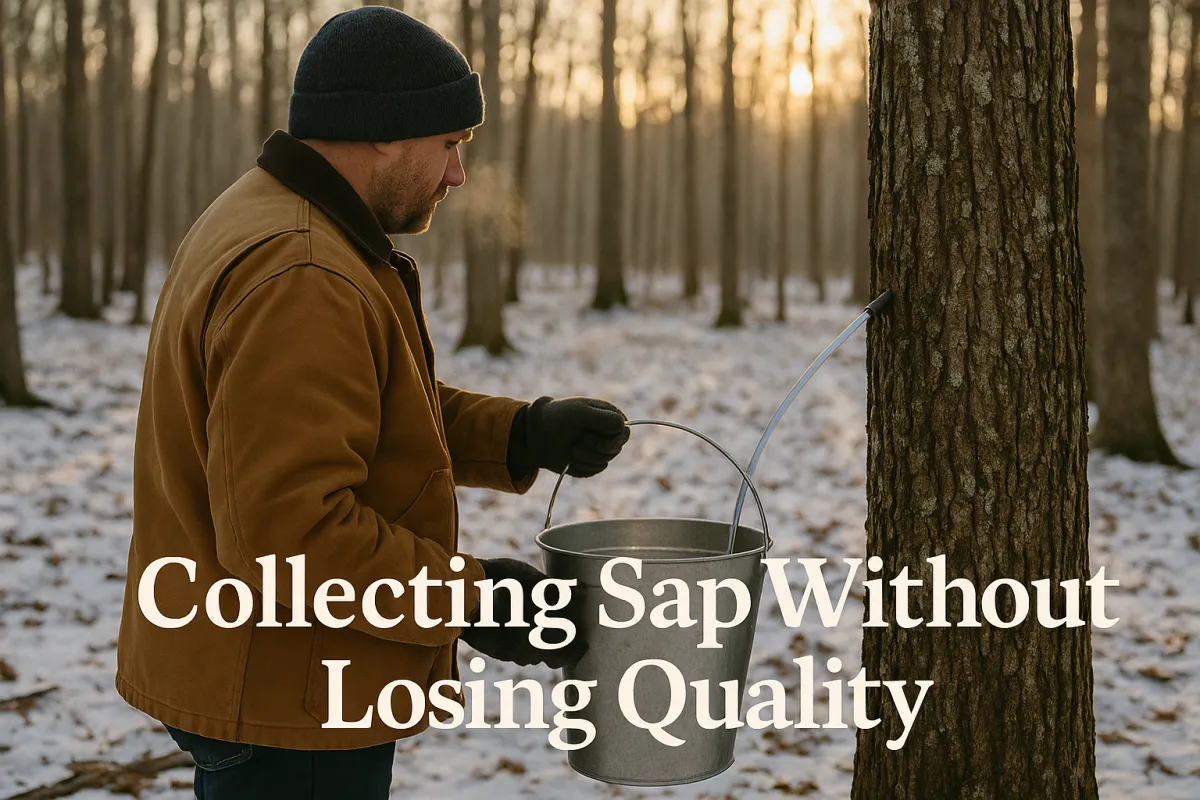
Collecting Sap Without Losing Quality
Collecting Sap Without Losing Quality
I still remember the first time I dumped a full tank of sap. Clear when I collected it. Cold when I stored it. Sour two days later. I stood there longer than I needed to, staring into the drain, doing the math in my head—hours, miles walked, taps checked—gone. That was the moment I learned the hard truth behind maple sap collection best practices: syrup quality isn’t decided at the boil. It’s decided in the woods, one disciplined habit at a time.
Storage is where most people lose sap—and here is how to prevent maple sap from spoiling before it ever reaches the evaporator.
If you want good flavor, safe syrup, and the morale to keep showing up every cold morning, sap handling matters more than most people want to admit. Miss your collection rhythm, break the cold chain, or stretch time limits, and you’ll fight sap spoilage no matter how good your evaporator is.
If you’re new to the process or want the full picture from tree to table, start here:
👉 Maple Syrup 101: How Maple Sap Becomes Syrup
This guide is about how I prevent spoiled maple sap the hard-earned way—through daily pulls, smart sap storage, and habits that protect quality before problems start. No shortcuts. No panic. Just steady work that keeps sap clean, cold, and worth boiling.
This is how I collect sap without losing quality—and without losing heart.

Why Sap Quality Is Won or Lost Before the Boil
Sap is alive. Not in a poetic way—in a microbial way. The moment it leaves the tree, the clock starts. Sugar-loving bacteria don’t care how hard you worked, how cold it felt, or how good your intentions were. They only care about time, temperature, and access to food.
And that clock starts the second the tap goes in—if you haven’t already, learn how proper tapping sets the foundation here:
👉 Choosing Trees & Tapping Right
That’s why maple sap collection best practices focus so heavily on what happens before the evaporator ever fires. Once sap warms, sits too long, or picks up contamination, sap spoilage is already underway—even if it still looks fine at first glance.
Here’s the quiet truth most folks learn the hard way:
If you’re sloppy early, no evaporator can save you later.
Breaking the cold chain, stretching storage temps, or ignoring realistic time limits allows bacteria to multiply fast. Flavor suffers first. Then safety. Then morale. By the time you notice an off-odor or sour sap, the damage is already done.
The goal isn’t perfection. It’s discipline.
Discipline in daily pulls
Discipline in sap storage
Discipline in knowing when sap is still good—and when it isn’t
Flavor, safety, and confidence rise and fall together. Protecting sap early is how you prevent spoiled maple sap later—and how you avoid learning the same lesson twice.
Daily Sap Collection Rhythms That Actually Work
Consistent sap quality comes down to one thing most people underestimate: collection rhythm. Not fancy equipment. Not volume. Rhythm.
When you follow maple sap collection best practices, you’re managing time and temperature every single day. Skip that discipline—even briefly—and sap spoilage creeps in fast.
Morning vs. Evening Pulls — What Matters Most
Morning collection wins whenever nights dip below freezing. Cold sap stays cleaner longer, preserves the cold chain, and buys you margin if the day warms up.
If you wait until late afternoon during a warm spell, you’re already behind. That sap has been climbing through temperature swings all day, and bacteria love that.
Evening pulls can work during deep freezes—but only with consistency. Miss a window once, and quality slips. Miss it twice, and you’re dealing with cloudy sap or early off-odor before you realize it.
Rule of thumb:
Collect when the sap is cold—not when it’s convenient.
Ohio State’s maple team has a practical in-season reminder on daily pulls, keeping sap cold, and how dirty equipment accelerates sap spoilage.
How Long Sap Can Sit in the Woods (Realistic Windows)
These are conservative, quality-first limits—not absolute spoilage lines. Colder sap can last longer, but flavor rarely improves by pushing it. There’s no universal clock, but there are reliable windows:
Cold spell (below 38°F): 24–48 hours is usually safe
Warm spells (above 40°F): Daily pulls are non-negotiable
Buckets: Shorter windows, more exposure, higher spoilage risk
Tubing: Buys you time—not forgiveness
Stretching time limits is one of the fastest ways to invite sap spoilage, especially during fluctuating weather.
Pro Tip: Miss a day once, and you’ll remember it all season. Miss it twice, and the sap teaches you the hard way.
This rhythm—cold collection, predictable timing, honest limits—is how you prevent spoiled maple sap before storage ever becomes an issue.

Cold Storage Rules — And Their Hard Limits
Once sap is collected, sap storage becomes the next make-or-break point. You can follow perfect collection rhythm and still lose quality if storage slips. This is where maple sap collection best practices either hold—or fall apart.
Sap wants to stay cold. Not cool. Cold.
Ideal Storage Temps (And What “Cold Enough” Really Means)
The sweet spot for storage temps is just above freezing. That’s where bacterial growth slows enough to protect flavor and safety.
Common cold-storage options that work—until they don’t:
Snowbank chilling on the north side of a building
Shaded storage in an unheated shed
Unheated garages during consistent cold
The problem isn’t the method—it’s drifting temps. Forty degrees may feel cold to you, but to bacteria it’s an open invitation.
If you wouldn’t store raw milk there, don’t store sap there.
Breaking the cold chain, even briefly, accelerates sap spoilage long before you smell it.
If you want a university-backed breakdown of why sap storage conditions drive final syrup quality, Cornell’s Maple Program lays it out clearly.
Time Limits by Temperature (Rule of Thumb)
These are realistic limits—not optimistic ones:
32–34°F: Up to 48 hours (sometimes a little more)
35–38°F: 24 hours
Above 38°F: Boil same-day. Quality declines quickly beyond 24 hours.
Pushing these time limits doesn’t make you efficient—it makes your syrup unpredictable.
This isn’t fear. It’s chemistry.

Cleanliness Without Paranoia
Clean sap doesn’t come from obsession—it comes from repeatable habits. This is where a lot of people either get lazy or go overboard. Neither helps you prevent spoiled maple sap.
Good maple sap collection best practices focus on removing food sources for bacteria, not chasing sterility.
What Actually Needs to Be Clean
These items touch sap directly and matter every time:
Clean buckets and collection containers
Transfer hoses used during moving or dumping
Storage tanks and lids
Clean means rinsed, drained, and free of residue. Old sugar film feeds bacteria fast. A simple rinsing routine after each use does more for sap quality than any chemical ever will.
Let equipment air dry fully between uses—it’s one of the most overlooked steps in sap sanitation.
What Doesn’t Matter as Much as People Think
This is where paranoia creeps in:
Over-sanitizing
Fancy chemicals
Sterile obsession
Hot water, consistent rinsing, and food-grade surfaces outperform complicated systems season after season.
Avoid This Mistake:
Dirty sap ruins syrup. Overthinking cleanliness ruins your season.
Clean habits protect sap storage, reduce sap spoilage, and keep your focus where it belongs—on steady work instead of constant worry.

When Sap Is Still Good — And When It Isn’t
Knowing when sap is still usable—and when it’s not—is one of the most important quality checks you’ll ever learn. This decision alone separates disciplined producers from frustrated ones.
If your goal is to prevent spoiled maple sap, you have to trust your senses more than your hopes.
Sight, Smell, Taste: The Three Checks That Matter
These checks are simple and reliable:
Clear sap: Good
Cloudy sap: Warning
Milky or ropey sap: Dump it
Cloudiness often shows up before smell does. Ropey sap means bacteria have already taken over.
Smell matters. An off-odor—especially sour or fermented—is your final warning sign.
And yes, tasting sap is normal. Sweet and clean is fine. Sour sap means it’s already changing, even if it looks acceptable.
Borderline Sap: Boil Now or Dump It?
When sap sits in that gray area, ask one honest question:
Would I regret boiling this into syrup?
If the answer is yes, don’t argue with it. Dump it and move on. Boiling questionable sap doesn’t just risk flavor—it risks your confidence in the finished syrup.
Good maple sap collection best practices include knowing when to quit. Protecting flavor grade sometimes means walking away from volume.
Bad sap makes bad syrup—and worse memories.
For a research-based look at what drives sap spoilage and how temperature and sanitation change outcomes, this Cornell resource is worth bookmarking.
Quick Sap Quality Checklist
Collect sap daily in warm weather
Keep sap below 38°F (ideally 32–34°F)
Boil within 24 hours when temps rise
Use clean, rinsed containers only
Dump cloudy, ropey, or sour sap
Sap Handling That Determines Final Syrup Quality
Here’s the part most beginners underestimate: sap age shapes syrup flavor long before it ever reaches the evaporator. You can boil perfectly and still end up with darker syrup or off-notes if handling slips earlier in the process.
This is where maple sap collection best practices quietly determine flavor grade.
Sap that sits too long—even under decent storage temps—begins to change. Bacteria consume sugars and produce byproducts that carry straight through the boil. That’s why:
Older sap pushes syrup darker
Sour sap creates flat or off-flavors
Late-season “buddy” notes often start days earlier in the tank
None of this is dramatic. It’s gradual. And that’s what makes it dangerous.
Every step that protects sap early protects syrup later:
Respecting time limits
Maintaining the cold chain
Using food-grade containers
Choosing to boil same-day when conditions demand it
Discipline is a flavor choice.
Every clean pull, every cold night protected, every timely decision stacks the deck in your favor. Handle sap with intention, and the syrup rewards you for it.
The Emotional Tax of Dumping Sap — And How to Avoid It
Dumping sap hurts. Not because of the sugar—but because of everything behind it. The cold mornings. The walking. The checking. The hope that this run would be a good one.
Sap spoilage drains morale faster than it drains a tank.
When you lose sap, it doesn’t just cost time—it introduces doubt. You start questioning your collection rhythm, your storage temps, your decisions. That’s when shortcuts creep in, and that’s how good seasons unravel.
This is why maple sap collection best practices aren’t just about chemistry—they’re about protecting momentum.
The fix isn’t tougher skin. It’s better systems.
Predictable daily pulls you don’t negotiate with
Clear, non-negotiable time limits for sap storage
One simple rule you never break when conditions change
When your systems are solid, decisions get easier. You don’t argue with borderline sap. You don’t second-guess quality checks. You act—and move on.
Protect your motivation the same way you protect flavor. Steady habits are how you prevent spoiled maple sap and keep the season from wearing you down.
Why Discipline Matters More Than Volume
It’s easy to chase volume. More taps. Bigger runs. Fuller tanks. Volume feels productive—but volume alone doesn’t protect quality.
Discipline does.
A small run handled well beats a big run handled sloppily every time. That’s one of the least glamorous but most important maple sap collection best practices to learn early.
When discipline leads, everything else settles into place:
Sap storage stays within honest time limits
The cold chain stays intact during warm spells
Quality checks become routine instead of reactive
Volume encourages shortcuts. Discipline prevents them.
When you know your sap is clean, cold, and worth boiling, the work feels lighter—even on the long days. You’re not guessing. You’re not hoping. You’re acting with confidence because your systems are doing their job.
That confidence compounds. Season after season, disciplined habits protect flavor grade, reduce sap spoilage, and make the work sustainable—not just productive.
Uncle Gary’s Wisdom
Uncle Gary said it once, standing next to a tank that was headed for the drain:
“Sap’s like milk. You don’t argue with it—you respect it, or you dump it.”
He never dressed it up. No charts. No lectures. Just the truth, said plainly. Sap doesn’t care how tired you are or how much you wanted that run to work. Respect the limits, or pay for it later.
That mindset sits at the core of maple sap collection best practices. Know the time limits. Trust your quality checks. Don’t negotiate with sap spoilage once it shows up. Clear decisions protect flavor—and your sanity.
A Steady Hand Makes Better Syrup
There’s a quiet stewardship to this work. Care comes before harvest. Faithfulness before reward. The woods respond to steady hands, not rushed ones.
Scripture says it plainly:
“Moreover it is required in stewards that one be found faithful.” (1 Corinthians 4:2, NKJV)
That applies here. Faithful to daily pulls. Faithful to the cold chain. Faithful to honest quality checks—even when dumping sap stings. This is how you honor the work and protect what comes after it.
When you’re ready to carry that care all the way to the finish line, read the final article in this series:
👉 Boiling Sap into Syrup: From Steam to Finish
Frequently Asked Questions
How do you keep maple sap from spoiling?
To keep sap from spoiling, control time, temperature, and cleanliness:
Collect sap daily during warm spells
Keep sap as close to 32–34°F as possible
Use clean, rinsed containers with no residue
Boil within 24–48 hours, depending on temperature
Once sap warms or sits too long, bacteria multiply quickly and spoilage begins—even if it still looks clear.
What are the best maple sap storage tips?
Strong sap storage comes down to a few non-negotiables:
Store sap just above freezing (32–34°F)
Keep containers shaded or packed in snow
Use food-grade containers only
Avoid temperature swings (this breaks the cold chain)
Never store sap where you wouldn’t store raw milk
Consistency matters more than the method.
How long can maple sap sit before boiling?
It depends on temperature:
32–34°F: up to 48 hours (sometimes slightly longer)
35–38°F: ~24 hours
Above 38°F: boil same-day
These are realistic limits, not optimistic ones. The longer sap sits, the more flavor and quality decline.
When should you boil maple sap?
Boil sap:
Within 24 hours during warm weather
Immediately if sap turns cloudy or develops an off smell
As soon as storage temps creep above safe range
If you’re unsure, the rule is simple:
When in doubt, boil sooner.
Can you store maple sap overnight safely?
Yes—if it stays cold. Overnight storage works well when:
Temps remain below 35°F
Sap is kept in shaded or insulated conditions
Containers are clean and sealed
If temperatures rise overnight, quality can drop faster than expected.
What happens if maple sap starts to spoil?
Spoiling sap shows clear signs:
Cloudy appearance
Sour or fermented smell
Thick or “ropey” texture
At that point, boiling won’t fix it.
Spoiled sap leads to off-flavored syrup or unusable product—dump it and move on.
Is it better to boil sap right away or store it?
Boiling sooner is always safer for quality. Storage is a tool—not a solution.
If conditions are warm or unstable, same-day boiling produces better syrup than pushing storage limits.

Facebook
Instagram
X
Youtube