
Tapping Season Setup: Buckets, Tubing, and Small-Scale Systems
Tapping Season Setup: Buckets, Tubing, and Small-Scale Systems
A Hard Lesson Before the Sap Ran
My first tapping season didn’t start with spreadsheets or shopping carts—it started with inheriting a running sugarbush. The lines were already hung. Spiles were in buckets. Tanks were where they’d always been. On paper, everything looked solved.
But walking into an existing setup brings its own kind of pressure. You don’t question much at first. You assume every spile, dropline, lateral, and mainline is there for a reason. You keep the buckets or tubing exactly where they are because someone before you made those calls.
That’s how people end up overspending later—not because they planned too much, but because they never slowed down to understand the maple sap collection system they inherited.
What finally clicked for me was this:
The best setup isn’t the one you’re handed—it’s the one you understand well enough to run confidently every day in March.
If you’ve stepped into a sugarbush—family land, a lease, or a hand-me-down system—this matters even more. Whether you’re deciding buckets vs tubing for maple syrup, or figuring out what to keep, replace, or simplify, clarity beats tradition every time.
Quick Start: Choosing Your Setup
5–30 trees: Buckets or bags
25–60 trees: Buckets (labor-heavy) or small tubing
60+ trees: Gravity tubing starts saving time
Flat land: Buckets
Sloped land: Tubing
Low time available: Tubing
Learning phase: Buckets

Three Ways to Collect Sap
At small scale, maple sap collection systems fall into three real categories. Everything else: gadgets, upgrades, brand debates—is just a variation on these themes.
The mistake most folks make isn’t choosing the wrong system. It’s choosing a system without honestly accounting for time, terrain, slope, cleanup, and sanitation. That’s where the buckets vs tubing maple syrup debate actually lives.
Quick Start: Choosing Your Setup
5–30 trees: Buckets or bags
25–60 trees: Buckets (labor-heavy) or small tubing
60+ trees: Gravity tubing starts saving time
Flat land: Buckets
Sloped land: Tubing
Low time available: Tubing
Learning phase: Buckets
Let’s break them down clearly.
Buckets (and Bags): Simple, Honest, and Time-Heavy
Buckets—and their close cousin, sap bags—are the most straightforward way to collect sap.
For newcomers who want a complete starter set that gets you from zero to sap flowing with minimal guesswork, a starter tapping kit with spiles, tubing, and hooks is a solid first investment.
What buckets do well
Lowest startup cost
Easy to understand and troubleshoot
No concern for grade, slope, or layout
Excellent teacher for sap flow, freezing, and thawing patterns
Where buckets quietly cost you
Daily walking adds up fast
Snow, mud, and ice slow everything down
Lids freezing shut steal time every cold morning
Cleanup and rinsing take longer than most expect
Best fit
5–30 trees
Yard trees or scattered woods
Flat or inconsistent terrain
First-time or learning seasons
Buckets don’t fail because they’re outdated.
They fail when people expect them to behave like tubing.
If you’re going old-school with a bucket-first system, a complete bucket starter kit with lids and taps helps you collect sap efficiently and minimize debris and freeze-ups
Gravity Tubing: Fewer Steps, More Planning
Gravity tubing changes how you work—not how much work exists.
What actually improves
Fewer collection points
Less walking per run
Cleaner sap entering tanks
Easier mid-day checks during good flow
What doesn’t
You still clean everything
Freeze-ups still happen
Poor layout kills performance
What gravity tubing requires
Consistent slope and grade
Thoughtful grouping of trees
Proper droplines, laterals, tees, saddles, and anchors
Time spent planning before drilling
Best fit
25–5000 trees
Woods with real elevation change
Producers short on daily time, not effort
Gravity tubing rewards planning. Skip that step and you end up with tangled lines, poor flow, and frustration.
Hybrid Systems: Flexible or Fatiguing
Hybrid setups mix buckets or bags on scattered trees with tubing where terrain allows.
They’re popular because they feel adaptable.
When hybrids are smart
Mixed terrain
Yard trees plus woods
Transition seasons between systems
When hybrids become a problem
Too many systems to clean
Different fittings, spare parts, and habits
Mental overhead that adds up fast
A hybrid system should reduce labor, not multiply decisions.
Pro Tip: If you can’t explain why a bucket, line, or tank is where it is, you’re not ready to upgrade anything yet.
Key takeaway: The right maple sap collection system isn’t about gear—it’s about matching trees, slope, time, and cleanup tolerance to a system you’ll run consistently.
If you want a research-backed overview of how sap collection works in both buckets and tubing—and why cleanliness matters—Cornell’s Maple Program lays it out clearly.

What Actually Changes When You Scale Maple Sap Collection Systems
Scaling maple sap collection systems isn’t gradual—it’s lumpy. Things work fine… until they don’t. And when they stop working, it’s usually because time and labor ran out before sap did.
This is where the buckets vs tubing maple syrup decision becomes unavoidable—not philosophical.
The Real Breakpoints (Where Systems Start to Strain)
10–15 trees:
Walking is easy. Buckets or bags are fine. Cleanup is manageable.25–40 trees:
Collection starts stealing evenings. Missed days matter. Buckets still work, but they demand discipline.60+ trees:
One skipped run costs real volume. Gravity tubing starts paying for itself in saved steps.100+ trees:
Layout matters more than brand. Slope, grade, dropline length, laterals, and mainline routing decide success—not equipment labels.
These aren’t opinions. They’re labor thresholds.
What Changes First (And What Doesn’t)
What changes
Walking distance becomes the limiting factor
Cleanup time compounds quickly
Small layout mistakes hurt yield
Tanks fill faster than expected
What doesn’t
Sanitation still matters
Freeze/thaw cycles still punish sloppy setups
You still touch every spile and lid eventually
Here’s the quiet truth most people miss:
People upgrade too early to escape discomfort, not inefficiency.
Buckets get uncomfortable before they get unworkable. That discomfort teaches you where tubing actually helps—and where it doesn’t.
Avoid This Mistake
Don’t scale gear faster than habits.
If cleanup already feels rushed, adding droplines, fittings, tees, saddles, and more rinsing won’t fix the problem—it magnifies it.
Key takeaway: Scaling works when labor savings outpace added complexity. Until then, simpler systems win.
For a straight explanation of what changes when you move from gravity systems to vacuum—and why yield can jump—this MapleResearch write-up is worth bookmarking.
Cost Breakdown: Starter → Modest Upgrade (What You’re Really Paying For)
When people talk about cost in maple sap collection systems, they usually mean money. That’s only half the bill. The rest shows up as time, cleanup, missed runs, and burnout—especially in the buckets vs tubing maple syrup decision.
Let’s be honest about both.
Barebones Starter Setup (Buckets or Bags)
Typical cost: $5–$10 per tap
What this usually includes
Buckets or bags
Spiles
Drill and bit
Minimal tanks or storage
This setup is cheap in dollars and expensive in labor.
Hidden costs
Walking every tap, every run
Freezing lids slowing mornings
More frequent boiling days
Longer cleanup and rinsing cycles
Buckets teach discipline. They also expose weak routines fast.
Smart Modest Upgrade (Selective Tubing)
Typical cost: $12–$20 per tap
This is where people either spend wisely—or waste money.
Worth spending on
Quality spiles that seal well
Food-grade tubing
Short droplines feeding clean laterals
Fewer, better collection points into tanks
Still skip
Pumps or vacuum at small scale
Overbuilt mainline for limited trees
“Future expansion” fittings you won’t use yet
Adding tubing should reduce steps, not add complexity.
Pro Tip: Cost vs Labor Reality Check
If an upgrade doesn’t:
Reduce walking
Improve sanitation
Simplify cleanup
…it’s not an upgrade. It’s a distraction.
Key takeaway: The smartest spending happens when dollars replace steps—not when gear replaces judgment.
For the most complete, industry-standard reference on collection systems, sanitation, and equipment choices, the North American Maple Syrup Producers Manual is the gold standard.
The True Cost of “Cheap” Maple Sap Collection Systems
Cheap gear always sends the bill somewhere else. In maple sap collection systems, that bill shows up as time, cleanup, and missed sap—not at the checkout counter. This is where many buckets vs tubing maple syrup decisions go sideways.
The Hidden Tax Nobody Budgets For
Cheap setups cost you in:
Extra cleanup and rinsing
More frequent freeze-ups during thawing cycles
Missed collection days when systems fail
Shortcuts that weaken sanitation and sap quality
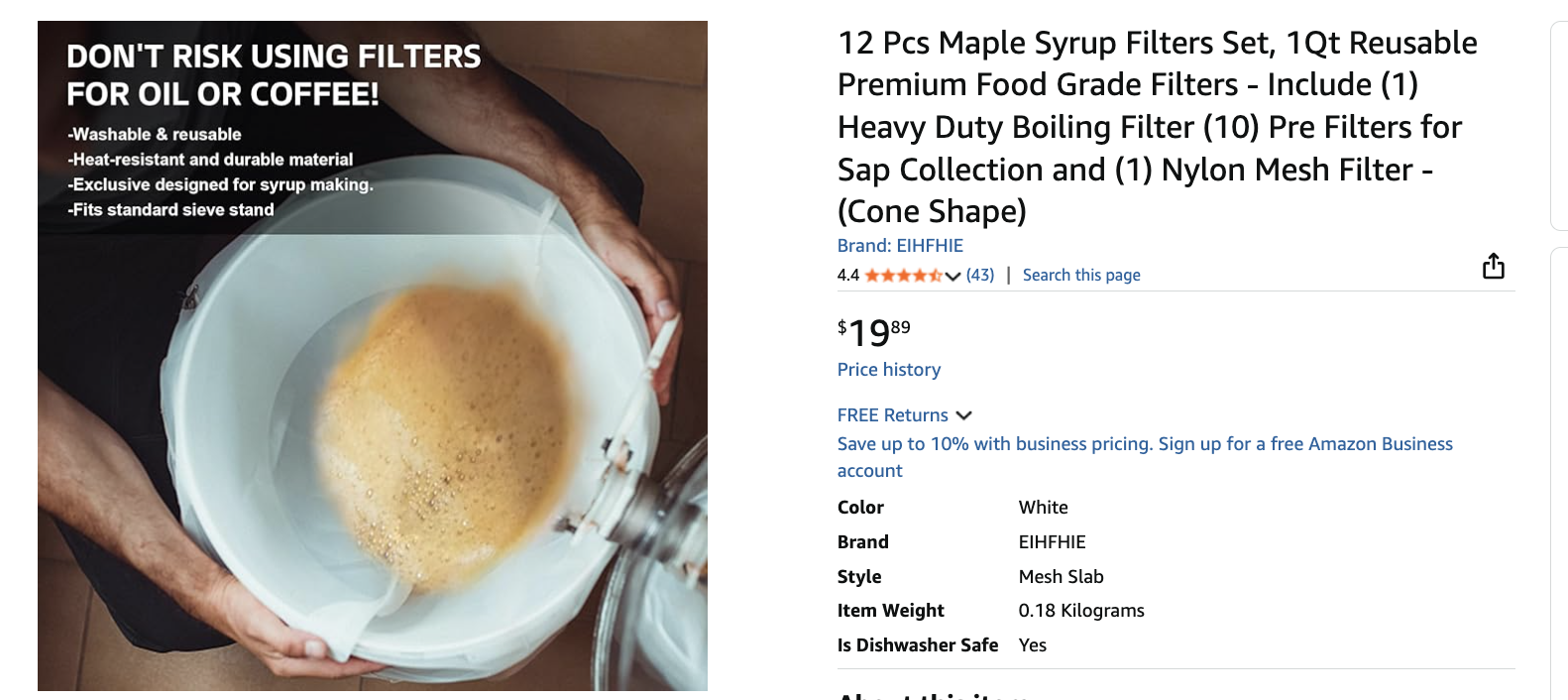
Good filtration isn’t just about syrup quality—catching sediment early with a heavy-duty filter sheet saves time and reduces rinse cycles later in the season.
Mental fatigue by week three of the season
A flimsy lid that freezes every morning doesn’t just slow you down—it costs gallons over a season. Multiply that across buckets, bags, tanks, and fittings, and the math gets ugly fast.
Where “Budget” Gear Breaks Down
Problems usually show up at:
Poorly sealing spiles
Thin lids that warp or crack
Tubing that kinks instead of holding grade
Fittings that trap sap and grow niter buildup
None of these fail on day one. They fail mid-season—when freezing and thawing cycles are relentless and patience is thin.
Say This Out Loud
Cheap setups don’t fail financially. They fail emotionally.
Once cleanup becomes exhausting and missed runs stack up, even good sap flow feels like a burden.
Key takeaway: Paying slightly more up front often costs less in lost sap, wasted time, and end-of-season burnout.
Equipment That Looks Useful—but Isn’t
Some equipment sells confidence instead of results. In small-scale maple sap collection systems, this is where money leaks out quietly—especially when people get caught in the buckets vs tubing maple syrup debate and start buying for a future they’re not ready for.
Common Traps to Watch For
Overbuilt tubing for a small number of trees
Heavy mainline, extra manifolds, and unnecessary fittings don’t improve flow if slope and grade are limited.Oversized tanks bought for “someday”
Bigger tanks don’t help if you can’t collect consistently or clean them efficiently.Gadgets that add steps
Extra valves, drains, and connectors often increase cleanup time without improving sanitation.Expansion parts you don’t yet need
Spare tees, saddles, anchors, and fittings sit unused while cluttering your workflow.
A Simple Filter Before You Buy
If a piece of equipment doesn’t clearly:
Reduce labor
Improve sap cleanliness
Simplify freezing and thawing headaches
…it can wait.
Instagram setups are staged. Real sap runs happen in cold boots, fading daylight, and uneven terrain.
Key takeaway: Useful equipment earns its place by saving time or protecting sap—not by looking “future-ready.”
Uncle Gary’s Wisdom
“If your setup makes you dread checking sap, it’s the wrong setup.”
Uncle Gary never chased efficiency for its own sake. He cared about workability. His sugarbush wasn’t fancy, but every spile, bucket, dropline, and tank had a purpose—and nothing was there just because it looked right on paper.
He paid close attention to how a system felt on the worst days. Cold mornings. Sloppy thawing afternoons. Long stretches of freezing when cleanup piled up and patience wore thin. If a setup made those days harder, he simplified it—even if it meant leaving sap on the table.
That mindset matters whether you’re running buckets vs tubing for maple syrup or inheriting a system you didn’t design. The goal isn’t maximum capacity. It’s consistent follow-through.
Uncle Gary’s rule was blunt and effective:
Build for the worst March day—not the best one.
Key takeaway: A maple sap collection system that fits your life will outperform a “better” system you avoid running.
A Simple Decision Framework
Most mistakes with maple sap collection systems come from skipping one step: stopping to decide what actually fits. This framework keeps the buckets vs tubing maple syrup decision grounded in reality, not optimism.
Answer these in order—without rushing.
Step 1: Count Real Trees
How many tappable trees do you actually have—not how many you hope to tap later?
Tree count sets the ceiling for:
Walking distance
Cleanup time
Tank size
Step 2: Read the Land
Do your trees sit on real slope and grade, or mostly flat terrain?
Good slope favors gravity tubing
Flat ground favors buckets or bags
Mixed terrain may justify a limited hybrid
Step 3: Measure Daily Time
How much time can you give this every day during freeze–thaw cycles?
Be honest. Fifteen rushed minutes won’t manage long laterals, droplines, and fittings.
Step 4: Know Your Cleanup Tolerance
How much rinsing, sanitation, and niter control are you willing to handle?
More tubing means fewer collection points—but more line to clean.
Step 5: Set a Hard Budget
Not a wish list. A ceiling.
A good system stays inside your budget without depending on “next year” upgrades.
Key takeaway: When you decide deliberately, the right system becomes obvious—and overspending stops.

When Not Upgrading Is the Smart Move
In small-scale maple sap collection systems, restraint is a skill. Most people assume progress means adding gear. Often, the smarter move—especially in the buckets vs tubing maple syrup debate—is holding the line for one more season.
Here’s when not upgrading pays off.
Don’t Upgrade If Any of These Are True
You skipped collection days last season
Cleanup and rinsing already felt rushed
You’re still learning sap timing during freezing and thawing cycles
Your boil schedule isn’t consistent
You don’t yet understand why each spile, bucket, dropline, or tank is where it is
Adding tubing, laterals, fittings, or more tanks won’t fix those problems. It magnifies them.
What Staying Put Often Improves
Holding your current system for another season often:
Improves yield through better timing
Sharpens daily habits
Reduces sanitation mistakes
Builds confidence in real conditions
This is especially true with inherited setups. Mastering what’s already there teaches you which upgrades actually matter—and which ones just look productive.
Say This Out Loud
Upgrades should feel boring when they’re right.
If an upgrade feels exciting, rushed, or overdue, it’s usually being driven by frustration—not necessity.
Key takeaway: The best time to upgrade is when your current system is running smoothly—and you can clearly explain what the next change will fix.
Region-Specific Notes (Northern Midwest Reality Check)
In the Northern Midwest, maple sap collection systems live or die by how well they handle freeze–thaw cycles. This is where theoretical debates about buckets vs tubing maple syrup stop mattering and real-world reliability takes over.
What the Climate Demands
Rapid freezing and thawing punish sloppy systems
Short runs mean missed days hurt more
Inconsistent weather exposes weak sanitation fast
A system that works “most days” isn’t good enough here.
Buckets vs Tubing in Cold Swings
Buckets and bags
Freeze solid overnight
Thaw unevenly
Demand early starts and patience
Recover quickly after cold snaps
Gravity tubing
Maintains cleaner flow when set on proper grade
Suffers when slope is marginal
Requires diligent rinsing and cleanup to avoid niter buildup
Rewards clean droplines, laterals, and fittings
Neither system is better by default. The better system is the one that recovers fastest after a hard freeze.
The Midwest Advantage (If You Use It Right)
Simple systems rebound quicker. Fewer parts mean:
Less ice damage
Faster resets
Easier sanitation
Lower emotional fatigue
In marginal seasons, reliability beats capacity every time.
Key takeaway: Build your sap collection system for cold stress, not ideal runs. The weather won’t cooperate—your setup has to.
Build the System You’ll Actually Run
You don’t need the perfect setup. You need a maple sap collection system that works when mornings are cold, daylight is short, and motivation is thin—the kind you don’t argue with yourself about before putting boots on.
Whether you’re weighing buckets vs tubing for maple syrup, inheriting a sugarbush, or holding steady another season, the goal stays the same: consistency beats capacity.
Scripture puts it plainly:
“Moreover it is required in stewards that one be found faithful.” — 1 Corinthians 4:2 (NKJV)
Faithfulness here isn’t flashy. It’s showing up, keeping things clean, and running a system you can manage well—day after day—through freezing, thawing, and everything between.
Start smaller than you think. Learn faster than you expect. Let trees, slope, time, and cleanup reality drive decisions—not pressure to scale.
Next step:
Read the next article in the series: Collecting Sap Without Losing Quality — where we lock in handling, sanitation, and daily habits that protect flavor from tree to tank.

Facebook
Instagram
X
Youtube