
Starting a Garden for Beginners: Easy Steps to Grow Success
Starting a Garden for Beginners: Easy Steps to Grow Success
The idea of starting a garden from scratch can feel like a huge, intimidating project. You see these gorgeous, overflowing gardens online and then look at your own patch of grass or empty balcony and think, "Where would I even start?" Trust me, every single gardener has stood in that exact spot.
The good news? A successful garden isn't about having some magical “green thumb.” It’s a skill, and like any skill, you learn it by doing.
We’re going to break this whole thing down into small, simple pieces. Forget about perfection. Gardening is about the joy of the process, celebrating the small wins (like your first ripe tomato!), and learning from the occasional flop. It’s about that quiet satisfaction you get from eating something you grew with your own two hands.
Getting Over the First Hurdles
Most people who want to start a garden get stuck before they even buy a single seed. The biggest roadblocks are usually in our heads, not in our yards. Do any of these sound familiar?
“I don’t have a green thumb.” Let’s just bust this myth right now. A “green thumb” is just knowledge you gain from getting your hands dirty. It’s earned, not inherited.
“It seems too expensive.” A garden can be as cheap or as expensive as you want. You can get started with a few big pots and some seed packets for less than you’d spend on a dinner out.
“I’ll just kill everything.” You probably will kill a plant or two. Every gardener in history has! Think of it as a lesson in what not to do next time, not a failure.
“I don’t have enough time.” A small, well-planned garden can be tended in just 15-20 minutes a day. For many people, that time becomes a peaceful break they look forward to.
The real secret is giving yourself permission to be a beginner. Don’t compare your first few pots to someone else’s elaborate ten-year-old garden. Your only goal right now is to get started. If you want a more structured approach, you can walk through our complete guide on garden planning for beginners.
The biggest mistake new gardeners make is heading straight to the store. The best place to start is right in your own yard. A little bit of thoughtful planning before you spend a dime will save you a ton of money and frustration down the road.
Your First Three Decisions
To get from "I want a garden" to "I have a garden," you only need to make a few key decisions. This isn't about creating some master plan for the next decade. It’s just about setting yourself up for success this first season. If you can lock in these three things, everything else will start to fall into place.
First, figure out where you're going to put it. This is all about finding the sunniest spot you've got with easy access to a water spigot.
Second, decide what you’ll plant in. Will it be a few big containers on the patio, a simple raised bed, or will you dig right into the ground?
And finally, choose which plants to grow. Stick to a handful of easy, forgiving plants like lettuce, radishes, or bush beans to build your confidence. Making these three choices gives you a clear, simple framework. It turns that overwhelming feeling into genuine excitement for what's to come.
To make it even simpler, here's a quick cheat sheet to guide those initial thoughts.
Your First Garden Decisions Cheat Sheet
This table breaks down the essential choices you'll make before you even pick up a shovel. It’s designed to help you make smart, simple decisions for a successful first year.

Nailing these three simple decisions is the first real step. It's how you turn that patch of lawn or empty balcony into your very own garden, swapping anxiety for a sense of purpose.
Finding the Perfect Spot for Your Garden
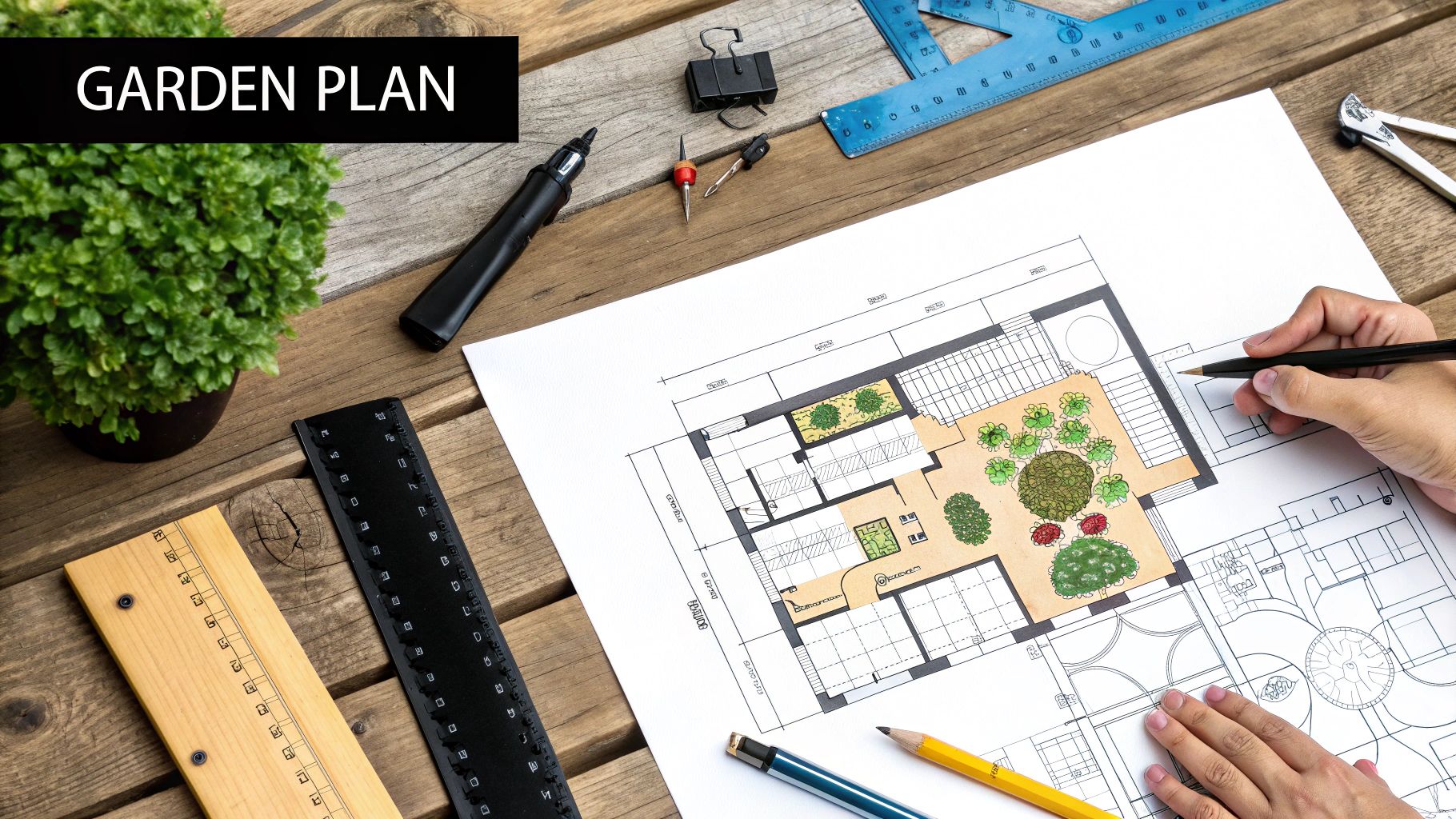
Where you decide to plant your garden is probably the most important choice you'll make. I've seen it time and again: a great spot can make a first-timer feel like a seasoned pro, while a bad one can frustrate even an expert. The trick is learning to read your own yard, figuring out where your plants will be happiest.
This isn't as hard as it sounds. You don’t need any fancy equipment, just your eyes and a little patience. We're going to focus on the three things that matter most for a garden site: sun, water, and stability. Get these right, and you're halfway to a successful harvest before you even touch a seed packet.
Master Your Sunlight
Sunlight is pure fuel for your garden. Most of the plants that beginners love to grow—especially vegetables like tomatoes, peppers, and cucumbers—are total sun-worshippers. They need at least 6 to 8 hours of direct, unfiltered sunlight every day to really thrive and produce. This is what gardeners call "full sun."
To figure out where these spots are, you’ll need to play sun detective for a day. It’s pretty simple:
Head outside around 9 a.m. and see which parts of your yard are getting hit with direct sun.
Do it again around noon and notice how those sunny patches have shifted.
Finally, take one last look at 3 p.m. to see where the late afternoon sun lands.
Any areas that were sunny during all three of your checks are your prime real estate. Make sure to watch out for shadows from your house, fences, or big trees. Those shadows move throughout the day and will change as the seasons do.
Beginner Tip: In the Northern Hemisphere, a south-facing spot is almost always your best bet for consistent, day-long sun. But don't despair if you don't have a perfect "full sun" location. Plenty of plants, like lettuce, spinach, and most herbs, do just fine with only 4 to 6 hours of sun, which we call "partial shade."
Plan for Practical Water Access
Your new garden is going to be thirsty, especially in the first few weeks and on those blazing hot summer days. The best garden spot is always within easy reach of a water spigot. Seriously, think about this before you start digging.
Trust me, hauling heavy watering cans back and forth across the yard gets old fast. It's one of those chores that can quickly turn a joyful hobby into a total drag. Before you commit to a spot, unroll your garden hose and make sure it can comfortably reach the area without being stretched tight or kinking around every corner. This tiny bit of planning will save you so many headaches down the road.
Check for Drainage and Stability
Plants hate having "wet feet," which is just a gardener's way of saying their roots shouldn't sit in a puddle. Good drainage is non-negotiable. Luckily, there's a simple test you can do to see how your soil handles water.
Dig a hole about 12 inches deep and 12 inches wide in the spot you’re considering.
Fill that hole all the way up with water and let it drain completely.
Fill it with water a second time, but this time, track how long it takes for the water to disappear.
If the water is gone within a few hours, you've got great drainage. If it’s still sitting there after 4-6 hours, your soil probably has a lot of clay and holds onto too much water. This is a super common problem, and you can either fix it by adding lots of compost or—the easier route for a beginner—choose a raised bed or container garden where you have total control over the soil you use.
Also, take a look at the ground itself. You want to avoid placing your garden in a low-lying spot where water pools after it rains. Same goes for the bottom of a slope, where a heavy downpour could wash everything away. A relatively level, stable spot that’s also sheltered from strong winds will give your young plants the safe, steady home they need to grow strong roots.
Creating Healthy Soil for Thriving Plants
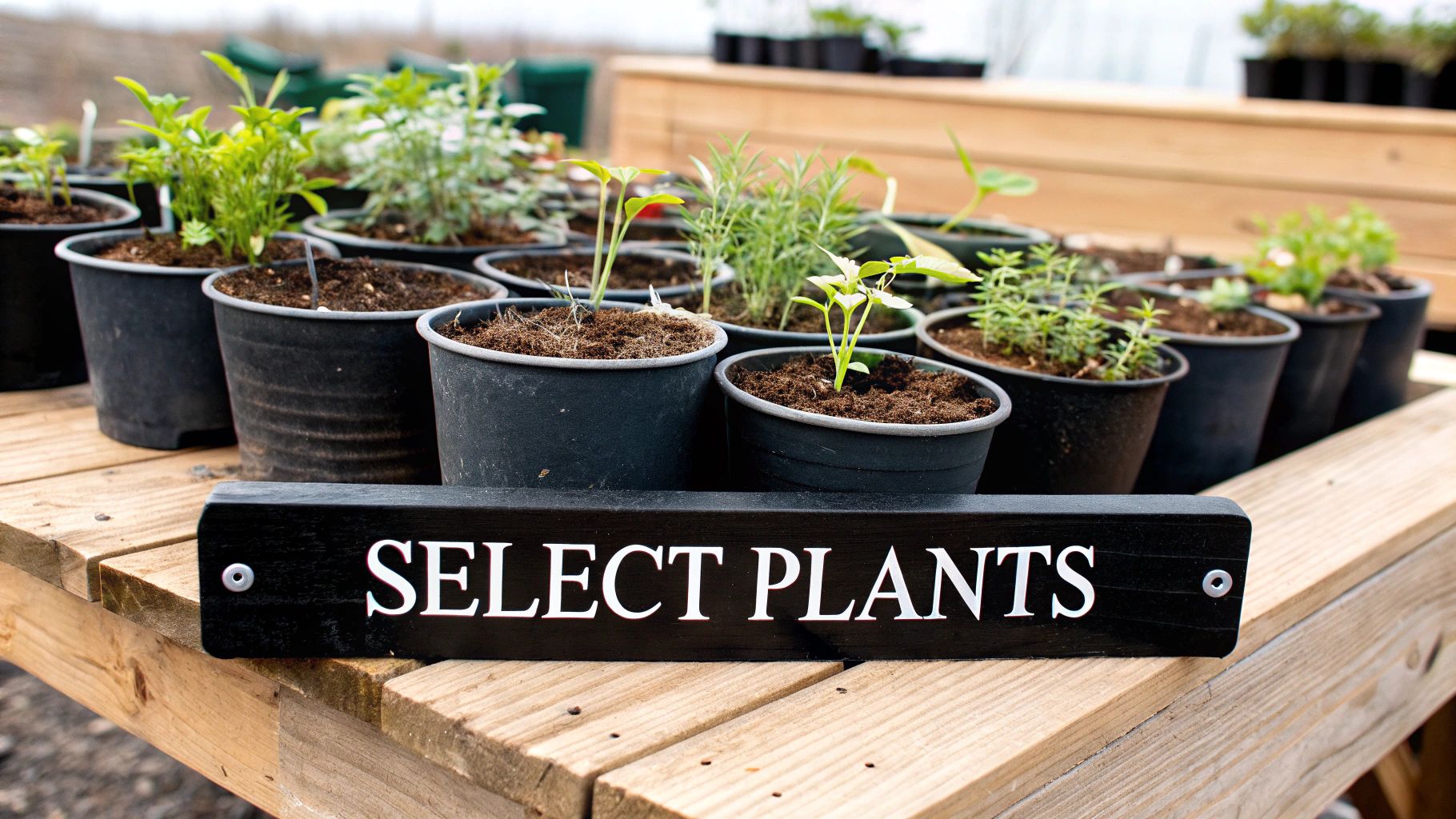
If your garden location is the real estate, then your soil is the foundation. Every healthy leaf, vibrant flower, and tasty vegetable you see growing above ground is a direct reflection of the life happening beneath the surface. When you're just starting out, it's easy to overlook soil, but I promise you, investing time here pays off more than anything else.
Your goal isn't just to have dirt; it's to create a living, breathing ecosystem. Healthy soil is teeming with billions of microorganisms that break down organic matter and deliver nutrients right where your plants need them—the roots. Think of it as building a bustling underground city that works around the clock to support your garden.
The good news? You don't need a degree in soil science to get this right. With a few simple techniques, you can turn almost any patch of ground into the perfect home for your plants.
Understanding What You're Working With
Before you can improve your soil, you need a basic idea of what you have. Most garden soils are a mix of three main particle types: sand, silt, and clay. Their ratio determines your soil's texture, which affects everything from how it holds water to how it holds nutrients.
A simple "squeeze test" is all you need to get a good read. Grab a small handful of moist (not soaking wet) soil and give it a firm squeeze in your palm.
Clay Soil: If it forms a tight, dense ball that you can even roll into a ribbon, you've got clay-heavy soil. It holds water and nutrients well but can get compacted and waterlogged.
Sandy Soil: If the soil feels gritty and falls apart as soon as you open your hand, you're working with sandy soil. It drains quickly—sometimes too quickly—and can struggle to hold onto nutrients.
Loam Soil: If it forms a loose ball that feels crumbly and slightly spongy, you've hit the jackpot. This is loam, the ideal garden soil with a balanced mix of all three particles.
Don't worry if your soil isn't perfect loam; very few gardens start that way. The best part is that the solution for both dense clay and loose sand is exactly the same: add organic matter.
The Power of Amending Your Soil
Amending the soil just means adding materials to improve its structure and fertility. And the single best amendment for any garden is compost. It's the ultimate multitasker.
In clay soil, compost breaks up the dense particles, improving drainage and aeration. In sandy soil, it acts like a sponge, helping to retain crucial moisture and nutrients. It’s the universal fix for almost any soil problem.
Think of compost as the food that fuels your soil's entire ecosystem. You can make your own or buy it bagged from a local garden center. Other fantastic organic amendments include aged manure, leaf mold, and grass clippings (just make sure they're from an untreated lawn).
When you're preparing an in-ground bed, a good rule of thumb is to spread a 2- to 4-inch layer of compost over the top. Then, work it into the top 6 to 8 inches of your native soil with a garden fork or tiller.
Prepping Different Garden Types
How you prepare your soil will depend entirely on where you plan to plant. Your approach for a traditional in-ground bed will look very different from prepping a container.

This interest in gardening shows no signs of slowing down. A 2025 forecast shows that nearly 56% of gardeners plan to expand their gardening space. The trend is especially strong among younger people, with 63.1% of Gen Z gardeners planning to plant more—a real enthusiasm for growing their own food.
For a deeper dive into creating the ideal foundation for your edible plants, check out our guide on the best soil for growing vegetables. Building healthy soil isn't a one-time task; it's an ongoing process. Each year, as you add more compost and organic matter, your soil will become richer, more fertile, and easier to work with, making your gardening journey more rewarding season after season.
Picking the Right Plants for Your First Garden
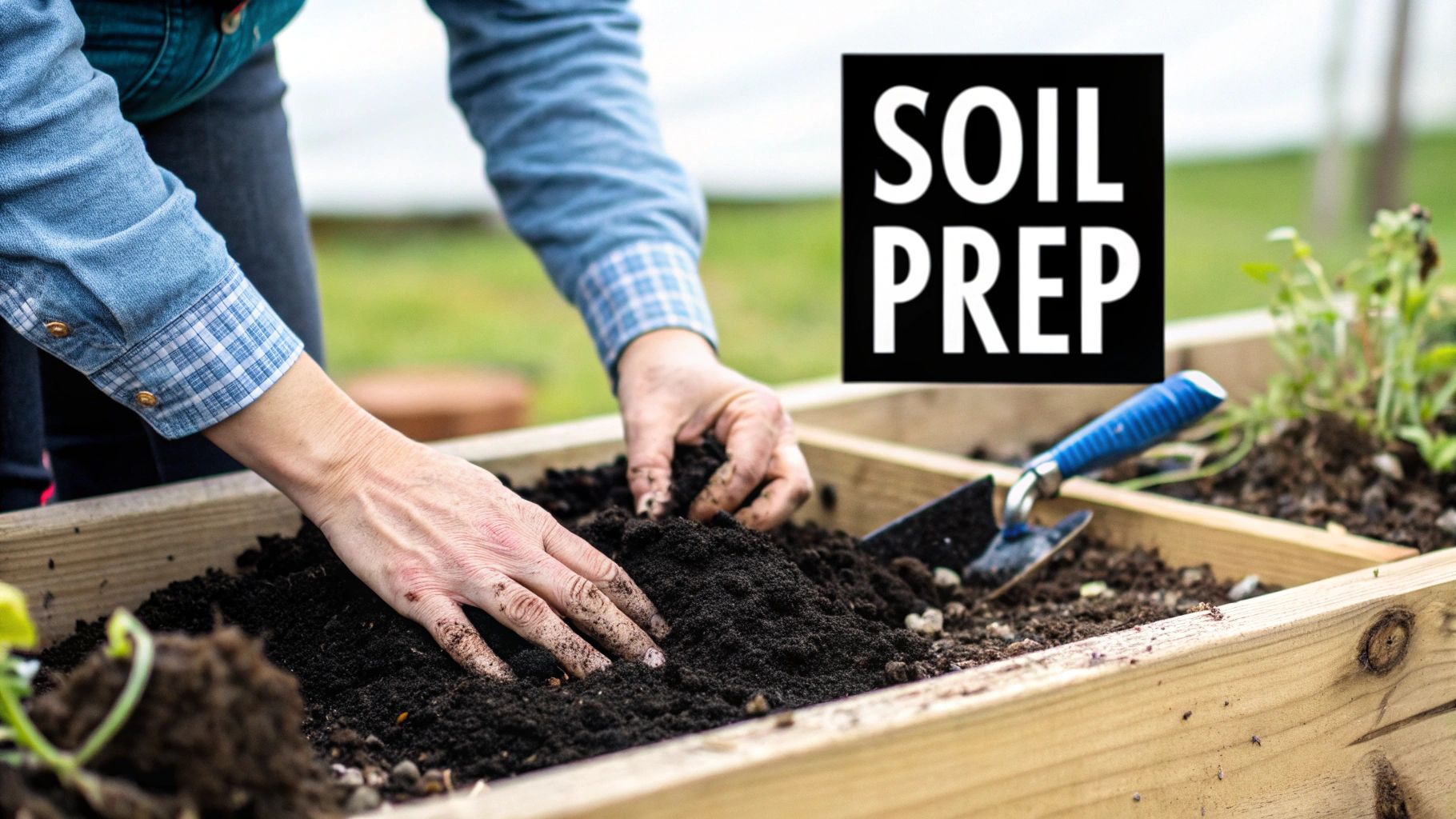
Walking into a garden center for the first time is a mix of pure excitement and sensory overload. With countless plants, colorful seed packets, and unfamiliar names, it’s easy to feel completely lost. This is where your garden dream meets reality, and the choices you make here can be the difference between a joyful first harvest and a season of frustration.
Let’s be honest: your goal this first year isn't to grow exotic, fussy plants. It's to build confidence. You do that by picking plants that are known to be forgiving, productive, and a perfect match for the garden site you just spent time picking out. It’s time to cut through the noise and figure out exactly what should be on your shopping list.
Match Plants to Your Space (and Your Skill)
If there's one golden rule in gardening, it’s this: "right plant, right place." This just means matching a plant’s needs to what your garden can offer. A sun-loving tomato will just sit there and sulk in a shady corner, and a water-loving mint plant will struggle in dry, sandy soil.
Before you buy a single thing, pull out your notes on your garden's sunlight. Do you have a spot with 6-8+ hours of direct sun? Or is it more like 4-5 hours of morning sun? This information is your filter. When you look at a plant tag or seed packet, the sun requirement is the first thing to check. If it doesn't match what you have, move on, no matter how tempting that plant looks.
For your first go-around, I always recommend sticking to plants known for their resilience. You want crops that can handle a little inconsistency with watering and are less likely to get wiped out by common pests and diseases.
Your mission is to get some early wins. Harvesting fresh salad greens in just a month or watching a zucchini plant explode with fruit is incredibly motivating. Success breeds more success, and it all starts with picking the right team of plants.
For a great starting point, check out some of the top 8 best vegetables to grow for beginners in 2025, which are all picked for their reliability and high yields.
Seeds vs. Starts: Making Your First Big Decision
One of the first practical choices you'll face is whether to buy a packet of seeds or a small, pre-started plant (often called a "start" or "transplant"). Each has its place, and the right choice depends on your budget, timeline, and the specific plant.
Seeds are incredibly cheap and offer a massive variety of options. Watching a plant grow from the very beginning is pure magic. The downside? It takes more patience, some seeds can be tricky to get going, and it adds weeks to your timeline.
Starts (Young Plants) give you a huge head start on the season and have a very high success rate. This is a game-changer for plants with long growing seasons, like tomatoes. The tradeoff is that they're more expensive per plant, and you have fewer varieties to choose from.
My advice? Do both.
For plants that grow fast and are easy to sow directly in the garden—like radishes, bush beans, lettuce, and spinach—start with seeds. For plants that take a long time to mature or are finicky to start from seed—like tomatoes, peppers, and broccoli—buy young, healthy starts. It's the best of both worlds.
Here is a quick look at some tough-as-nails plants that are perfect for getting your hands dirty.
Top Forgiving Plants for Beginner Gardeners

These plants are your confidence-builders. They grow quickly, produce reliably, and can tolerate the learning curve that comes with any new skill. Start here, and you'll have something to show for your efforts.
Making Smart Choices at the Nursery
Gardening trends show that new gardeners are getting smarter with their money. A 2025 survey found that while 54.6% of novices planned to keep their spending the same, there was a 13.5% decrease in those planning to spend more. What’s really interesting is that picking the right plant variety (32.6%) was a much bigger deal to them than the price tag (12.3%). People want the right plant, not just the cheapest one.
When you're at the store, be picky. Inspect plants carefully.
Look for starts with vibrant green leaves and strong, sturdy stems.
Avoid anything with yellowing, spots, or visible bugs.
If buying seeds, look for packets with words like "disease-resistant," "vigorous," or "good for beginners."
These little clues on the packaging are your guide to a garden that's set up for success from day one.
Your Guide to Planting and Everyday Garden Care
You’ve picked the spot, you’ve prepped the soil, and you’ve chosen your plants. Now for the best part: getting your hands dirty and bringing it all to life. This is where the magic really happens—turning all that planning into a living, growing space.
The goal here isn't to create a bunch of new chores. It's about establishing simple, easy habits that make tending your garden a peaceful ritual. Proper planting and a basic care routine are what will carry your garden through the entire season.
Getting Your Plants in the Ground
Whether you're starting from tiny seeds or young plants from a nursery, giving them a solid start is everything. How you plant them sets the stage for their entire life, influencing how strong their roots become and how well they handle the stresses of summer.
Working with young plants (often called "starts") is pretty straightforward. Start by gently easing the plant from its container. Take a look at the roots. If they’re tightly wound into a circle at the bottom—what gardeners call being "root-bound"—gently tease them apart with your fingers. This small step encourages the roots to spread out into their new home instead of continuing to circle.
Dig a hole that’s just a bit wider than the plant's root ball and about the same depth. Settle the plant into the hole, making sure the top of the root ball is level with the surrounding soil. Then, backfill the hole, gently pressing the soil down around the base to get rid of any big air pockets.
Spacing is your next big consideration. I know it’s tempting to cram everything together for a full look right away, but this usually backfires. Overcrowded plants have to fight for sunlight, water, and nutrients. Worse, the lack of airflow can invite pests and diseases. Always trust the spacing advice on the plant tag or seed packet—it’s there for a very good reason.
Creating Your Core Care Routine
Once your garden is planted, your job shifts from builder to caretaker. Consistency is your best friend. A simple, repeatable routine—planting, watering, and feeding—is all you need to keep things on track.
This visual breaks down the basic weekly rhythm of a happy garden.
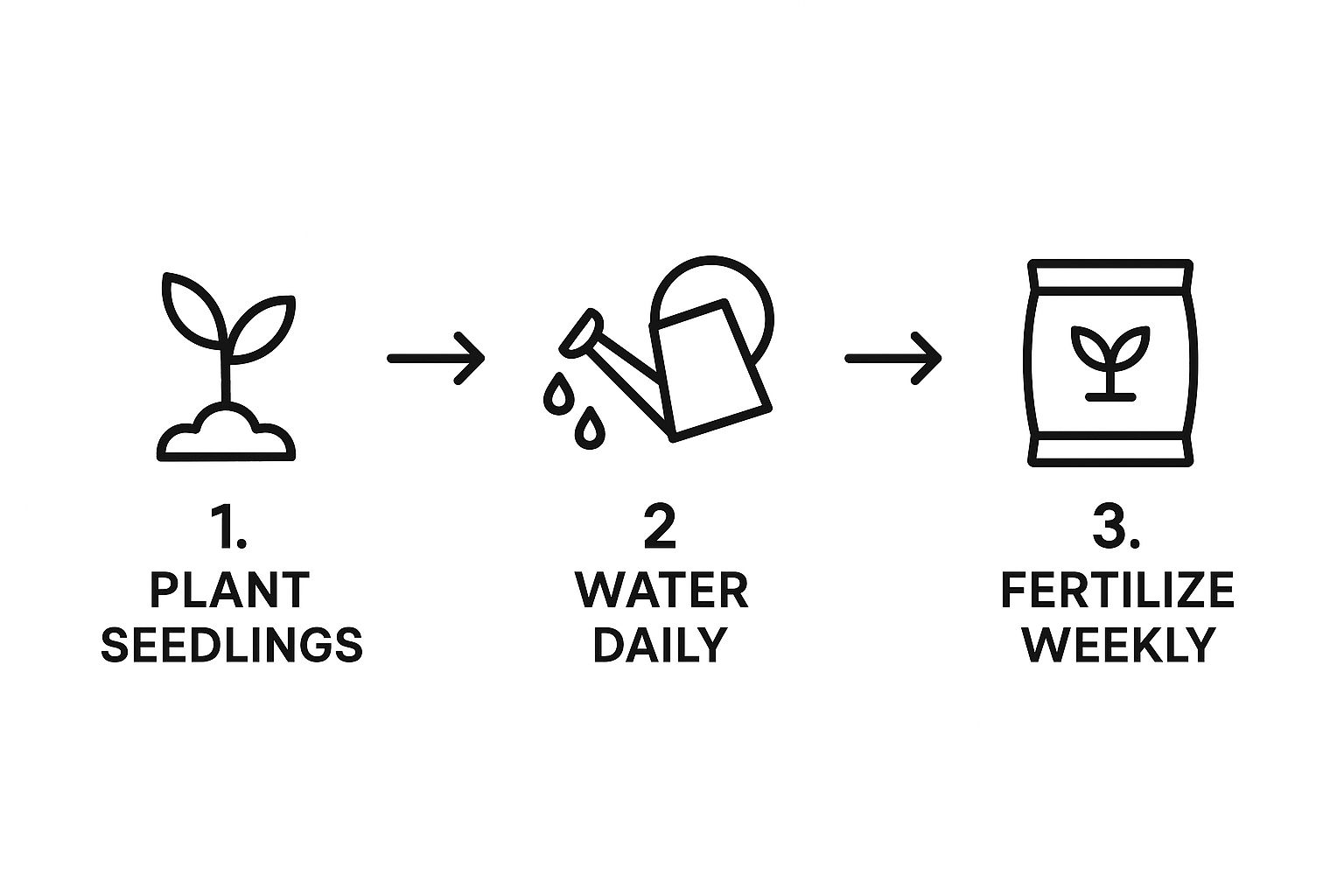
The main idea is that garden care isn't one big task, but a cycle of small, repeated actions. Each one builds on the last to create a healthy, productive space you can be proud of.
The real secret to garden maintenance isn't about blocking off your entire Saturday. It's about spending 10-15 minutes most days. This small, consistent effort makes the process enjoyable and helps you catch problems before they spiral out of control.
The Art of Effective Watering
Water is life for your plants, but how you water is more important than you might think. The most common mistake I see beginners make is giving their garden a quick, shallow sprinkle every day. This actually trains the roots to stay near the surface, leaving them vulnerable during hot, dry weather.
Your goal should be to water deeply, but less often. This simple change encourages plants to send their roots down deep in search of moisture, building a much stronger and more drought-tolerant foundation.
Here’s how to get it right:
Check the Soil First: Before you even grab the hose, stick your finger an inch or two into the soil near your plants. If it feels dry at that depth, it’s time to water. If it’s still damp, you can wait.
Water the Base: Aim the water directly at the base of your plants, soaking the soil, not the leaves. Wet foliage is a welcome mat for fungal diseases.
Time It Right: The best time to water is in the early morning. This gives your plants a full tank to get through the heat of the day and allows any wet leaves to dry quickly in the sun.
Mulching: Your Garden's Secret Weapon
If there’s one thing that will save you time, water, and weeding, it’s mulch. Mulch is just a layer of organic material—like straw, shredded leaves, or wood chips—spread over the soil around your plants. A 2- to 3-inch layer is all it takes to work wonders.
Here’s why mulch is a gardener’s best friend:
It holds in moisture, which can reduce how often you need to water by up to 50%.
It smothers weeds by blocking the sunlight they need to sprout.
It regulates soil temperature, keeping roots cooler in the summer and warmer in the winter.
It builds healthier soil as it slowly breaks down and adds organic matter over time.
This single step is a game-changer. It saves you work while actively improving your garden's health for the long haul.
It's no surprise that more people are getting into gardening. In 2025, the home gardening market hit a value of about USD 15.78 billion, and it's projected to grow to USD 26.47 billion by 2034. This boom is fueled by a collective desire for greener living and the adoption of smart, eco-friendly methods. You can discover more insights about the growing home gardening market online. By doing simple things like mulching and watering mindfully, you’re not just growing plants—you’re part of a larger movement toward a more sustainable lifestyle.
Common Questions for First-Time Gardeners
Even with a solid plan, it’s natural to have a few last-minute questions pop up right before you stick the shovel in the ground. Getting clear on these common worries is often the final push you need to get started with confidence.
Let's walk through the questions I hear most often from new gardeners. Think of this as a quick conversation to settle those "what if" moments and get you growing.
How Much Does It Really Cost to Start a Small Garden?
This is one of the best parts—your starting budget is completely up to you. You can get a garden going for the cost of a few pizzas or invest a bit more for a setup that will last for years.
A simple container garden is the most affordable way to start, usually running between $50 and $100. That's enough for a few good-sized pots, a bag of quality potting mix, and a handful of seed packets or starter plants.
If you’ve got your eye on a small in-ground or raised bed, maybe a 4x4-foot frame, you can expect to spend somewhere in the $150 to $300 range. This covers the cost of the bed materials, the soil to fill it, and your first set of plants. The biggest variable here is what you use to build the frame.
Want to keep the budget tight? Get scrappy. You can slash your startup costs by:
Making your own compost from kitchen scraps.
Starting from seed instead of buying pricier starter plants.
Finding used tools at garage sales or on Facebook Marketplace.
Joining a local plant swap to trade for things you need.
Your first garden is about learning, not about breaking the bank. Start small and let your garden (and your budget) grow with your confidence.
What Are the Most Common Beginner Mistakes?
Every seasoned gardener has a graveyard of plants they killed when they were starting out. It's part of the learning curve. But if you can sidestep these common pitfalls, you’ll save yourself a lot of heartache.
The number one mistake I see is overwatering. More beginner plants drown than die of thirst. It’s an act of love, but it’s deadly. Before you even think about watering, stick your finger an inch or two into the soil. If it's damp, walk away.
The second is picking the wrong location. A sun-hungry tomato plant will just sit there and sulk in the shade. Go back to your sun map and be honest about the light your spot gets. This single decision makes or breaks a garden.
And finally, the classic blunder: starting too big. It’s so easy to get carried away by the excitement and plan a massive plot. But a huge garden quickly becomes a source of guilt and overwhelm. It’s far better to have a tiny, thriving garden than a large, weedy, neglected one. Start with two pots or one small bed. You can always expand next year.
How Do I Deal with Pests Without Harsh Chemicals?
Your best defense against pests isn’t a spray bottle—it’s a healthy garden. Strong, well-nourished plants are naturally more resistant to bugs and diseases. Think of it as building up your garden's immune system.
Start by creating a balanced ecosystem. You can invite beneficial insects like ladybugs (who are fantastic aphid hunters) by planting companion flowers like dill, marigolds, and yarrow. A garden buzzing with life is a healthy garden.
When you do find pests, try these gentle-but-effective methods first:
A strong jet of water from the hose is often enough to knock aphids and spider mites right off your plants.
For bugs that won't take a hint, insecticidal soap and neem oil are my go-to organic options. They work by smothering soft-bodied insects and are much safer for the environment. Just be sure to follow the package directions.
Don’t underestimate the power of hand-picking. It sounds tedious, but plucking off big pests like tomato hornworms or cabbage worms is incredibly effective. A quick daily patrol can stop an invasion in its tracks.
Vigilance is everything. Spend a few minutes looking over your plants each day, and you'll be able to solve problems with the simplest tool first.
How Much Time Will My Garden Take Each Week?
Like the cost, the time commitment is scalable. Once your garden is planted and established, a small beginner plot will likely need about 1 to 3 hours per week for core tasks like watering, weeding, and checking for pests.
The initial setup will take more time, of course. Plan on a good weekend day to build any beds, prep the soil, and get everything planted.
But here’s a better way to think about it: instead of blocking out a big chunk of time for "garden chores," try weaving it into your daily routine. Spending just 15 to 20 minutes in your garden most days makes the work feel effortless. It becomes a peaceful ritual—a chance to connect with your plants and notice small problems before they become big ones. This turns maintenance from a chore into a rewarding habit.
At The Grounded Homestead, we believe that growing your own food is one of the most rewarding skills you can learn. Our goal is to provide you with the knowledge and confidence to move from simply wanting a garden to actually having one. Explore more guides and tips at https://thegroundedhomestead.com and join our community of growers.

Facebook
Instagram
X
Youtube