
How Do You Check pH Level in Soil: The Ultimate Guide
How Do You Check pH Level in Soil: The Ultimate Guide
Before you even think about planting, there's one simple number that can make or break your entire garden: your soil's pH. You can figure it out with a simple DIY test kit, a digital pH meter, or by sending a sample to a professional lab for the most precise reading. Each route will tell you whether your soil is acidic, neutral, or alkaline—critical information for growing healthy, productive plants.
Why Your Soil pH Is a Secret Weapon for Garden Success
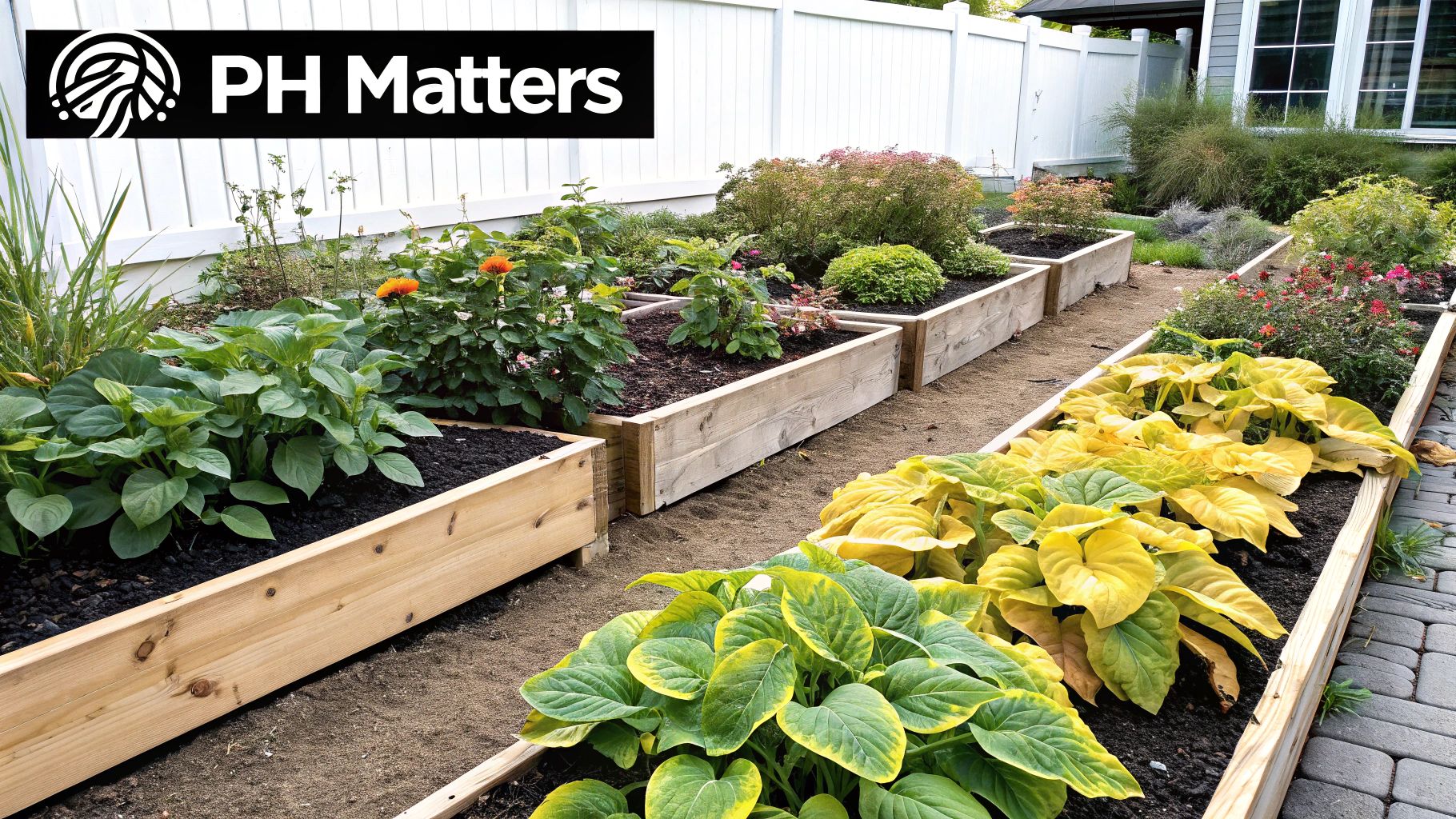
Think of soil pH as the gatekeeper standing between your plants and the nutrients they need to survive. It's measured on a simple scale from 0 to 14, where 7.0 is perfectly neutral. Anything below that is acidic, and anything above is alkaline.
Most of the vegetables and flowers we love to grow thrive in a sweet spot that's slightly acidic to neutral, usually somewhere between 6.0 and 7.0. When the pH drifts too far outside this range, essential nutrients like nitrogen, phosphorus, and potassium get chemically "locked up" in the soil.
It doesn't matter if your soil is packed with nutrients or if you've been adding expensive fertilizers. If the pH is wrong, your plants simply can't absorb what's right there in front of them. It’s like putting a locked pantry in front of a hungry person.
The Real-World Impact of Improper pH
An off-balance pH is often the hidden culprit behind the most common gardening frustrations. I've seen gardeners with gorgeous, lush tomato plants that just won't produce a single fruit—a classic sign of too much nitrogen, which can be tied directly to a pH imbalance. Or what about hydrangeas that stubbornly stay pink when you’re aiming for that stunning blue? That's your alkaline soil preventing the plant from taking up aluminum.
Getting a handle on your soil's chemistry isn't just for experts. It’s the foundation for:
Maximizing nutrient absorption: Make sure your plants can actually eat the food you give them.
Preventing plant deficiencies: Say goodbye to yellowing leaves, stunted growth, and poor harvests.
Saving money on fertilizers: Stop wasting products on nutrients your plants can't even access.
Soil pH isn't uniform across the globe. A global soil study found that topsoil pH can range from a very acidic 4.6 to an alkaline 8.0, showcasing how diverse growing conditions can be. Learn more about these global soil patterns and the research behind them.
Getting your soil composition right is everything. By managing your pH, you’re creating the perfect environment for roots to thrive, which is a key piece of building the https://thegroundedhomestead.com/post/best-soil-for-growing-vegetables. This one number empowers you to make smarter decisions that lead to a healthier, more abundant garden.
Choosing the Right Soil pH Testing Method
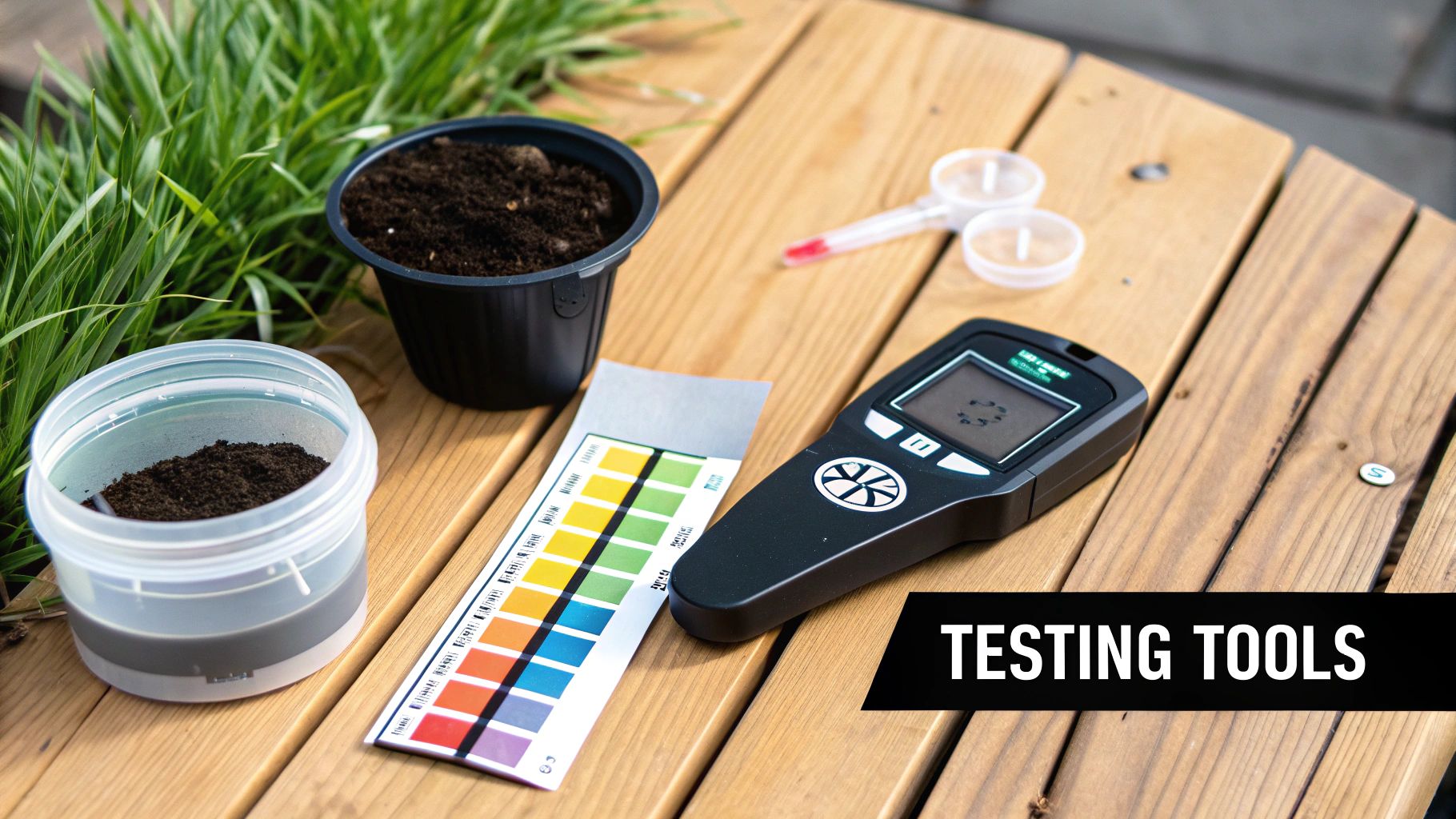
Not all soil tests are created equal, and the right one for your garden really comes down to your goals, your budget, and how precise you need to be. Think of it like a health checkup: a simple test kit is a quick temperature check, a digital meter is a more detailed diagnostic, and a professional lab test is a full physical with specialist recommendations.
For most new gardeners, a simple DIY test kit is the perfect place to start. They’re cheap, you can find them anywhere, and they’ll give you a solid ballpark reading. If you’re just trying to figure out why your hydrangeas are pink instead of blue, this method gives you a fast, useful answer without much fuss.
Stepping Up to Digital and Professional Options
If you’re a more dedicated gardener or you're wrestling with ongoing plant problems, a digital pH meter is a serious upgrade. These give you an exact number—like 6.2 instead of just a color range—which is critical when you need to make precise soil amendments. It’s a fantastic tool for tracking how your soil changes over time after you've added lime or sulfur.
But for the most complete picture, nothing beats a professional lab test. This is the best move when you're starting a large garden, farming a small plot, or when you've tried everything and your plants still just aren't thriving.
A lab test costs more, but it removes all the guesswork. It gives you an exact pH and a detailed breakdown of nutrient levels, organic matter, and specific advice on what to add to your soil. It’s an investment in getting it right from the start.
Comparison of Soil pH Testing Methods
Picking the right tool often boils down to a few key trade-offs. It helps to see how each method stacks up in terms of cost, precision, and what kind of information you'll get back.

Ultimately, choosing the right method is about matching the tool to the task at hand. For a deeper look into the different approaches you can take, our guide on soil testing at home explores these options in much greater detail. Any of these methods will give you valuable information to help you build a healthier, more productive garden.
Mastering the Home Soil pH Test Kit
Those common DIY soil test kits—the ones with the little capsules and color charts—are a fantastic starting point for any gardener. They're affordable and can give you surprisingly good results, but only if you get the small details right. Let’s walk through how to use one to get a reliable reading the first time.
The biggest mistake I see gardeners make is grabbing soil right from the surface. That top layer is often misleading due to mulch, rain, and fertilizer residue breaking down. For a meaningful result, you need to sample where the roots actually live, which is typically 4 to 6 inches deep.
Use a clean trowel or spade to dig down and collect your sample. If you’re testing a larger area like a vegetable bed, don't just take soil from one spot. Instead, gather small amounts from five or six different places within that bed and mix them all together in a clean bucket. This creates what's called a composite sample, which gives you a much better average reading for the entire area.
Getting the Mix Just Right
Once you have your soil, the process is pretty straightforward, but it demands a bit of precision. First, pick out any rocks, roots, or other little bits of debris from your composite sample. Now, follow the kit’s instructions for filling the test vial with soil—you want it full but not packed down too tightly.
The next step is critical: always use distilled water. Your tap water has its own pH, which will absolutely throw off your results. Add the distilled water up to the designated line, then carefully open the capsule and pour in the reagent powder. Pop the cap on, make sure it's secure, and shake it like you mean it until the powder fully dissolves and the water takes on a distinct color.
This quick test is really just a simplified version of a widely recognized scientific method. This infographic breaks down the basic workflow.
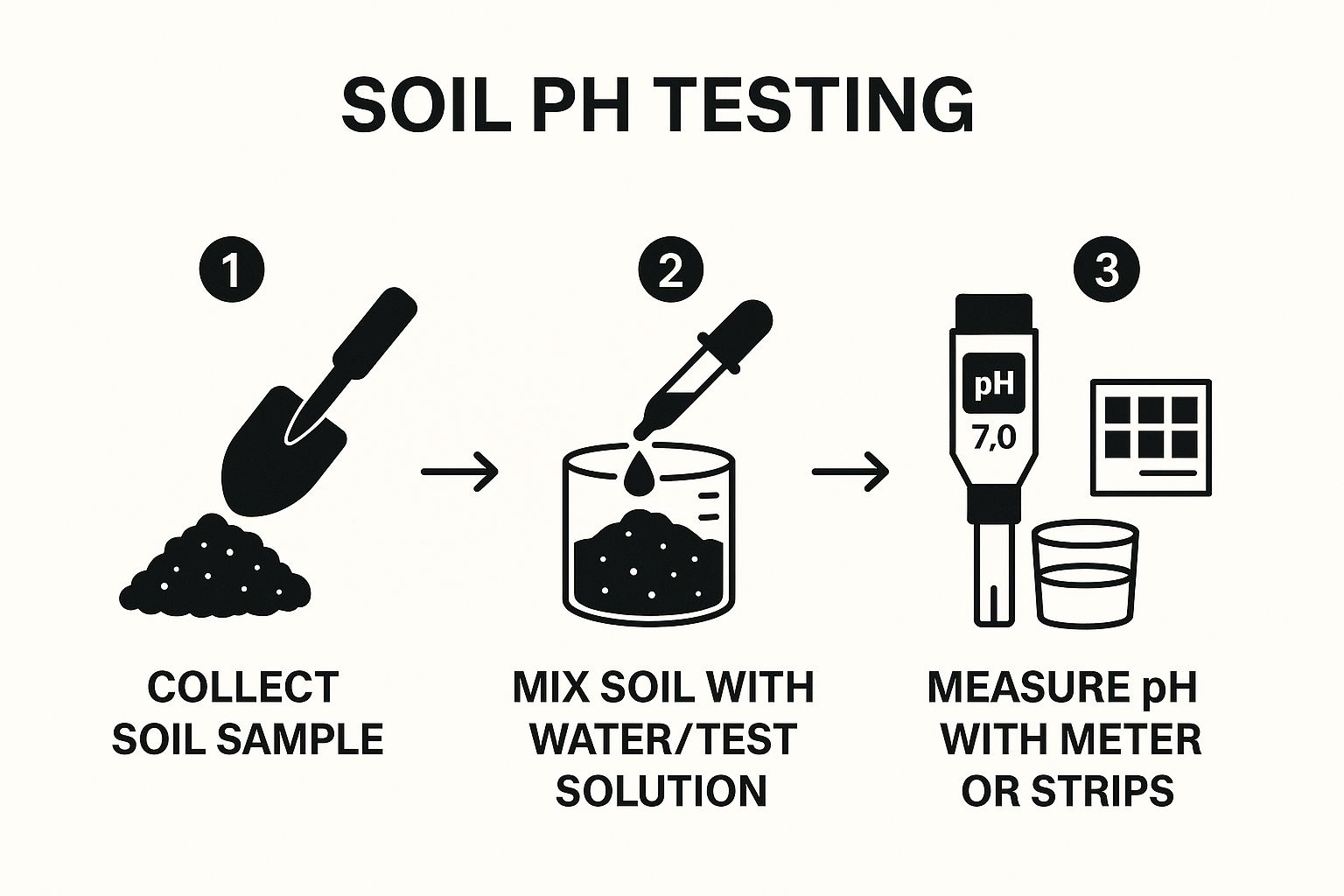
As you can see, whether you're using a simple kit or a fancier digital meter, the core steps of collecting, mixing, and measuring stay the same.
Reading the Results with Confidence
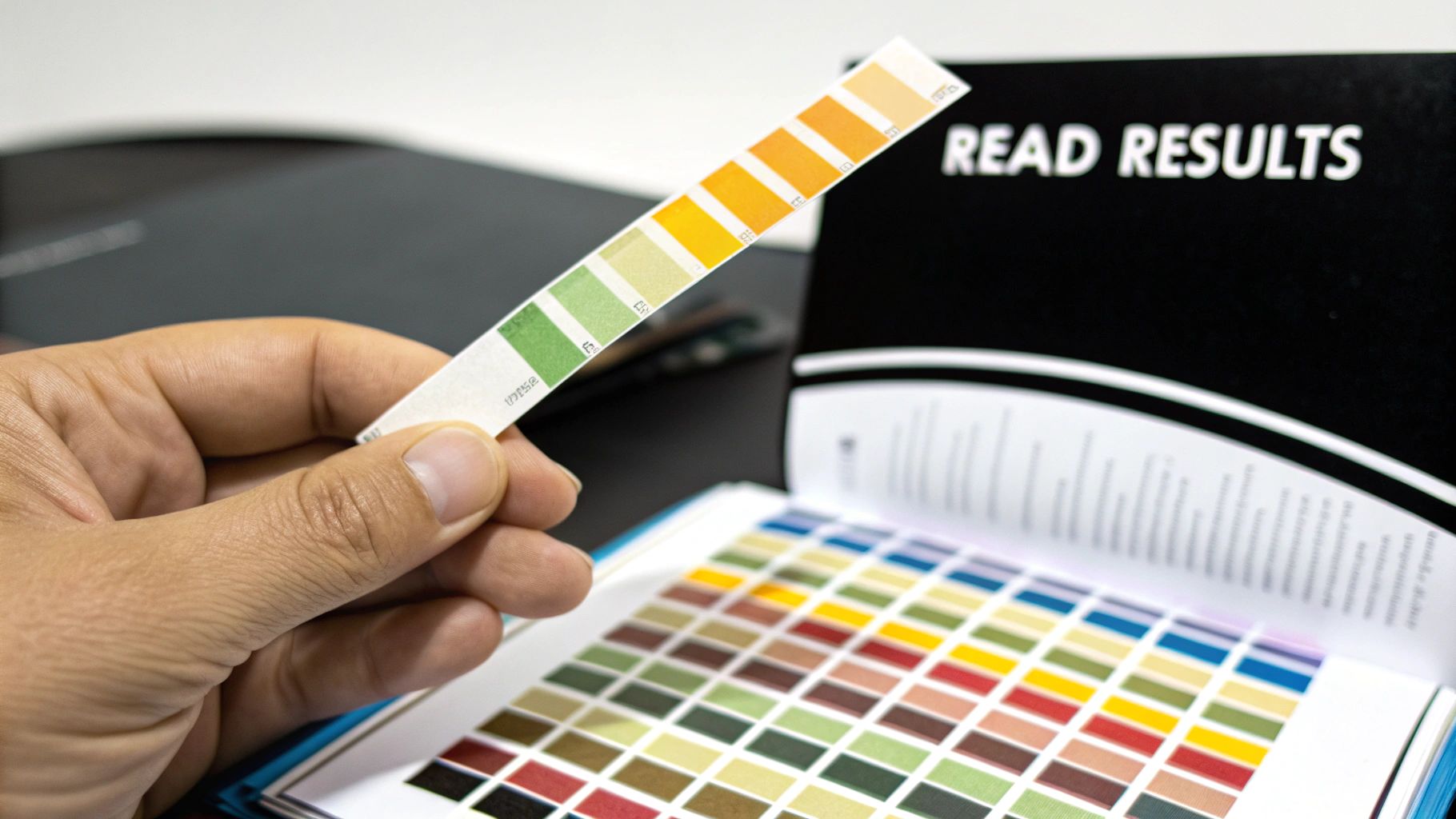
After a good shake, let the vial sit for a few minutes. You need to give the soil time to settle to the bottom. This is when the magic happens—the water will start to clarify, revealing its final color. Now, hold the vial up against the color chart that came with your kit.
Make sure you're in good, natural light.
Pro Tip: Don't try to read the color chart under indoor lighting or in direct, harsh sunlight. Both can mess with your perception of the color. An overcast day or a shady spot on your porch provides the most accurate light for a perfect match.
Matching the color can feel a little subjective sometimes, but take your time to find the closest one. This is what gives you your pH reading. For instance, a green hue might indicate a neutral pH of 7.0, while a yellowish-orange suggests your soil is more acidic, maybe around 5.5. That number is your starting point for building a healthier garden.
Getting Precision Readings With a Digital pH Meter
If you’re the kind of gardener who wants to move past ballpark estimates and get exact numbers, a digital pH meter is your best friend. Unlike color-coded kits, it gives you a precise reading, taking all the guesswork out of your soil analysis.
But here’s the catch: its accuracy depends entirely on how you use it, and that starts with one non-negotiable step—calibration.
Think of it like tuning a guitar before you play. Your meter needs a reliable baseline to measure against, and you get that by using buffer solutions—special liquids with a known, stable pH. Skip this, and your readings could easily be off by a full point or more, leading you to add the wrong amendments to your soil.
Most meters use a two-point calibration. You’ll typically need a neutral 7.0 solution and either an acidic 4.0 or alkaline 10.0 solution. Just follow the instructions that came with your meter to dip the probe and adjust the reading until it matches. Honestly, it’s best to do this before every single testing session for results you can actually trust.
Creating the Perfect Soil Slurry
Once your meter is calibrated and ready to go, it's time to prep your soil sample. You can't just stick the probe directly into the garden bed. For the meter's electrode to work correctly, you need to create a slurry.
In a clean, non-metallic container, combine one part soil with one part distilled water. A half-cup of soil and a half-cup of water is a good ratio to start with. Give it a vigorous stir for about a minute to get the soil fully suspended, then let it sit for 15-30 minutes. This waiting period is crucial; it allows the soil and water to reach a stable equilibrium.
The most accurate soil pH measurements today rely on glass electrode meters reading the electrical potential in a soil suspension. Accuracy hinges on the method; soils are mixed with distilled water or sometimes a salt solution to create this slurry. Using a salt solution can help maintain a more consistent ionic strength, which cuts down on variability in the readings. You can learn more about the science behind these highly accurate testing methods if you want to dig deeper.
After your slurry has settled for a bit, go ahead and insert the calibrated probe, but only into the liquid portion that has separated above the soil.
Be patient here. The numbers on the screen will likely jump around at first—that's normal. Just wait until they lock onto a steady value before you record your reading. This can sometimes take up to a full minute.
When you're finished, always rinse the probe with distilled water. This prevents any residue from contaminating your next test.
Turning Your pH Results Into Action
Getting a number from your soil test is the easy part. The real work—and the real success—comes from turning that data into a smart action plan. Your pH result tells you what your soil’s current state is, which directly impacts what nutrients your plants can actually use.
The goal isn't to chase a perfect 7.0 across the board. It's about creating the ideal environment for the specific plants you want to grow.
For instance, acid-loving plants like blueberries and azaleas are happiest in soil with a pH between 4.5 and 5.5. On the flip side, vegetables like kale and asparagus, along with flowers like lilacs, prefer more alkaline conditions, often flourishing in a pH range of 7.0 to 8.0. Most common garden vegetables and flowers, however, do best in that slightly acidic sweet spot between 6.0 and 7.0.
Adjusting Acidic Soil
If your test comes back with a pH below 6.0, your soil is acidic, and you'll likely need to raise the pH. This process is often called "liming," and the key is to make slow, gradual changes. You want to gently nudge the soil's chemistry, not shock its delicate ecosystem.
Common amendments for raising soil pH include:
Dolomitic Lime: A fantastic choice because it adds both calcium and magnesium, two essential micronutrients that are often lacking in acidic soils.
Calcitic Lime: This one just adds calcium but tends to work a bit faster than dolomitic lime if you need a quicker adjustment.
Wood Ash: Use this one with caution. It's highly alkaline and can raise the pH very quickly, so a little goes a long way.
Let's say you have a clay lawn with a low pH of 5.2. Applying dolomitic lime in the fall is a great strategy. This gives the lime all winter to break down and work its magic, setting you up for lush, healthy growth come spring.
Remember, the goal is gradual improvement. Over-applying lime can be just as damaging as leaving the soil acidic, and it's much harder to correct. Always follow the application rates on the product packaging for your specific soil type.
Managing Alkaline Soil
If your pH reading is above 7.5, your soil is on the alkaline side, and you’ll need to lower it for most plants to really thrive.
Adding organic matter is one of the best long-term strategies here. As materials like compost, peat moss, or pine bark fines decompose, they release organic acids that gently lower the soil pH over time.
For a more immediate fix, you can use elemental sulfur. Our guide on preparing garden soil dives deeper into how to properly incorporate these types of amendments without overdoing it.
Got Questions About Soil pH Testing?
Even with the right gear, a few questions always seem to come up when you first start digging into your soil’s pH. Let's clear up some of the most common ones so you can test with confidence.
How Often Should I Be Testing My Soil?
For an established garden that’s doing well, checking the soil pH every two to three years is a good rhythm. You’re just making sure things haven’t drifted too far off course.
However, if you're actively trying to change your soil's pH—say, by adding lime to raise it or sulfur to lower it—you'll want to check it once a year. This lets you track your progress and adjust your plan. And of course, always test before you break ground on a brand-new garden bed. It’s the best way to start off on the right foot.
Can I Just Use Tap Water for the Test?
That’s a hard no. This is one of those small details that makes a huge difference.
Your tap water is full of minerals that make it either slightly acidic or alkaline, and those minerals will absolutely throw off your reading. To get a true picture of your soil’s chemistry, you must use distilled water. It has a perfectly neutral pH of 7.0, so you know the final number reflects your soil and nothing else.
Why Do I Need to Take Samples from Multiple Spots?
Think of your garden bed like a patchwork quilt—the soil chemistry is rarely the same everywhere. The patch under that big pine tree is probably a bit more acidic, while the soil next to a concrete walkway might be more alkaline from lime leaching out.
Taking small scoops from several different spots and mixing them together creates a "composite sample." This gives you a much more accurate average pH for the entire area, so you're not making big soil decisions based on one random, quirky spot.

Facebook
Instagram
X
Youtube